There’s something about drawing cute animals that makes me want to keep going once I’ve started. I’ll sketch a little cat, then decide it needs a bunny beside it, and before long there’s a whole page of adorable creatures looking back at me. Baby elephants are a particular favorite – I love their enormous ears and those little trunks.
For this blog post, I’ve put together 32 cute and easy animal drawing ideas, from fluffy woodland animals to tiny garden visitors. Most begin with simple shapes, so you can work out the outline before adding faces, fur, or a little shading. Some are quick doodles, while others give you more room to practice your art skills. Pick whichever catches your eye, grab a pencil, and enjoy the process.
Let’s dive into these cute animal drawing ideas and find your next cute little sketch, shall we?
Sleepy Bear
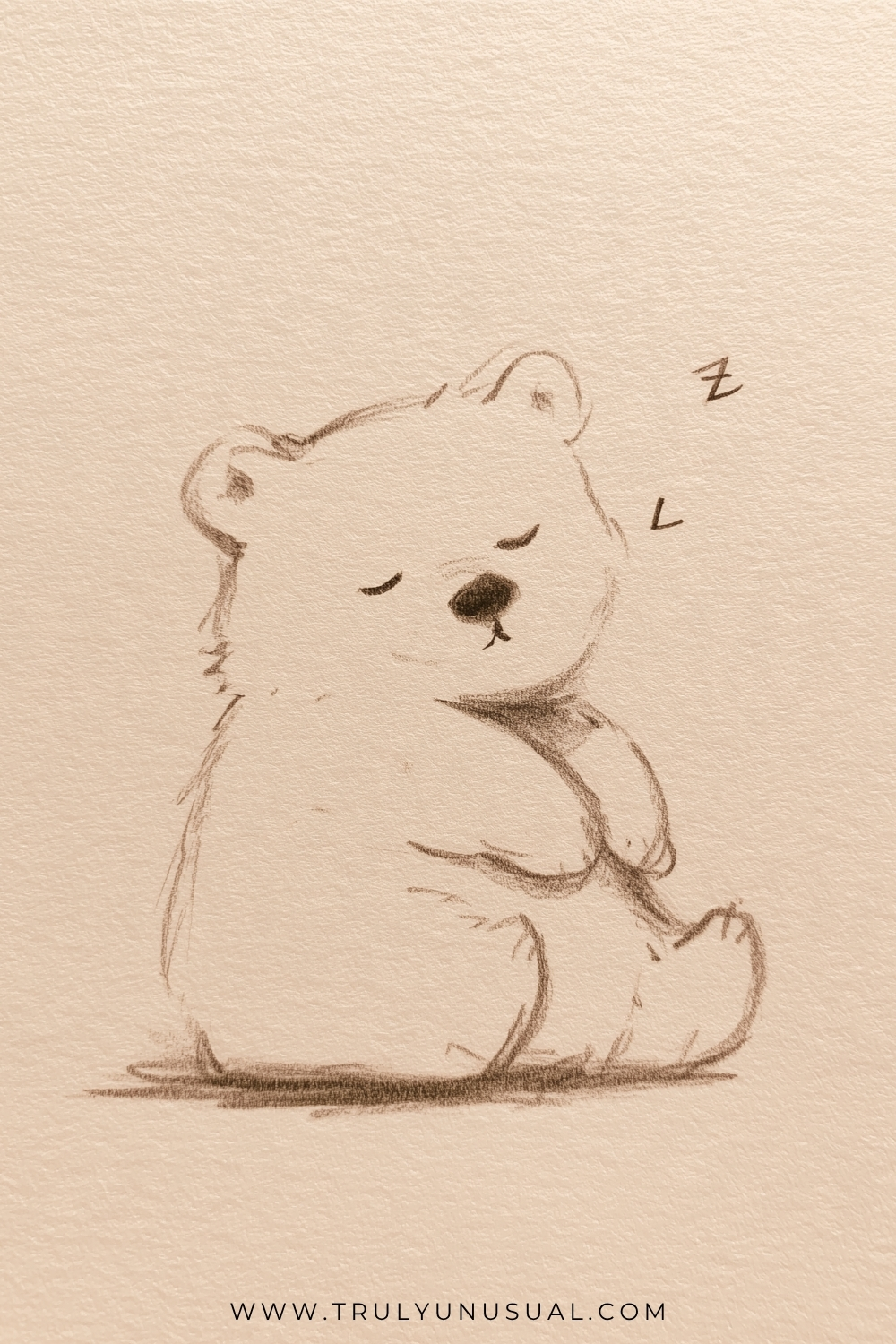
With its eyes closed and head leaning to one side, this little bear looks ready for a nap.
Sketch the head at a slight angle, then tuck the rounded body underneath so the whole pose feels relaxed. Two short curves are enough for the eyelids – keep them softer than the dark nose. The paws rest loosely over the belly, with the hind feet stretching out in front.
Add a little shading beneath the chin and arms, then a couple of sleepy marks beside the head.
Chubby Hedgehog
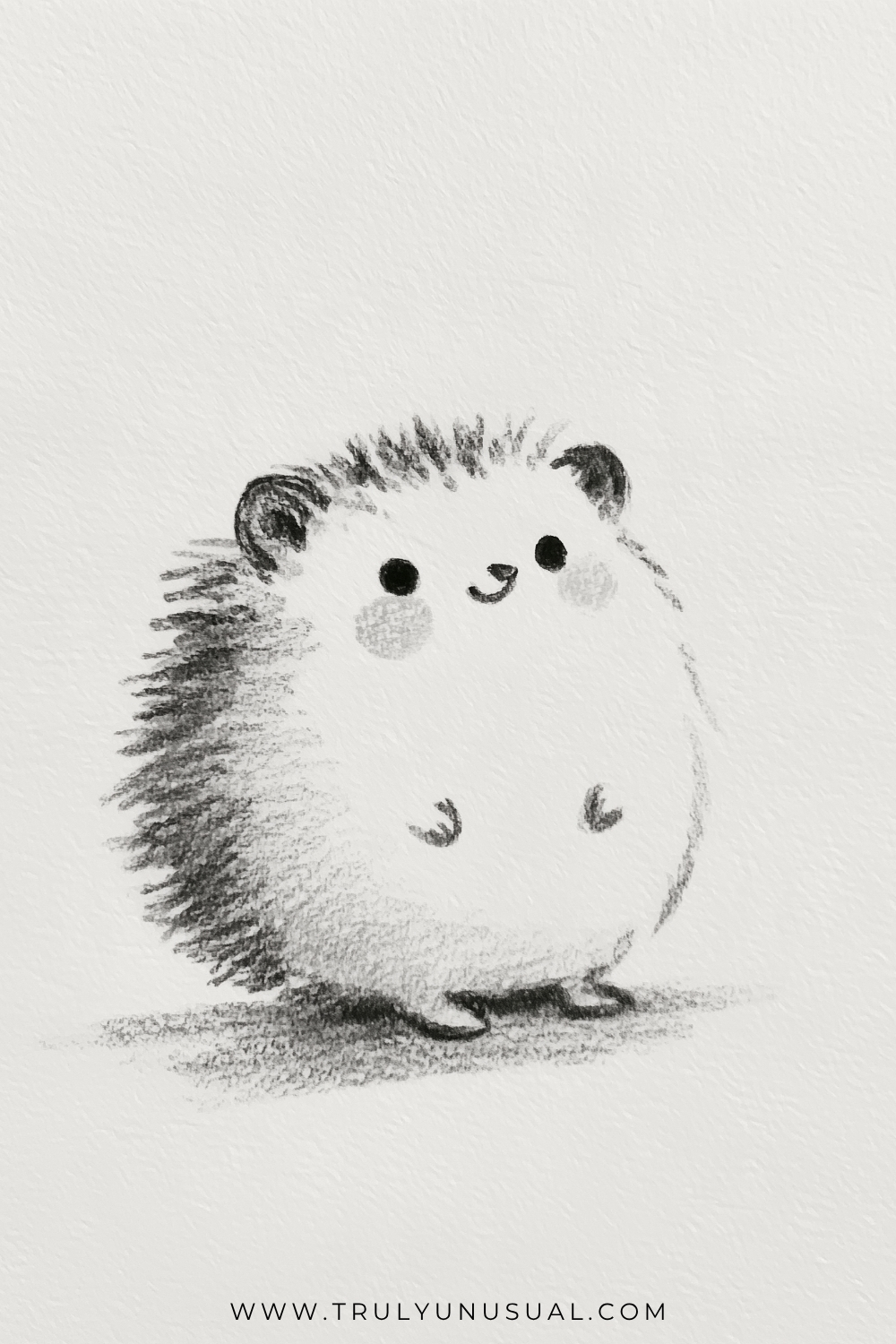
The contrast between a pale belly and dark, scruffy spines gives this hedgehog most of its character.
Lightly sketch an egg-shaped body, leaving room around the back for short strokes that stick out beyond the outline. Vary their length and direction a little rather than making a perfectly even row. Small round ears, dot eyes, and a tiny upturned mouth keep the face simple.
Shade more heavily along the left side, letting the pencil marks become lighter as they approach the belly.
Little Fox With A Fluffy Curved Tail
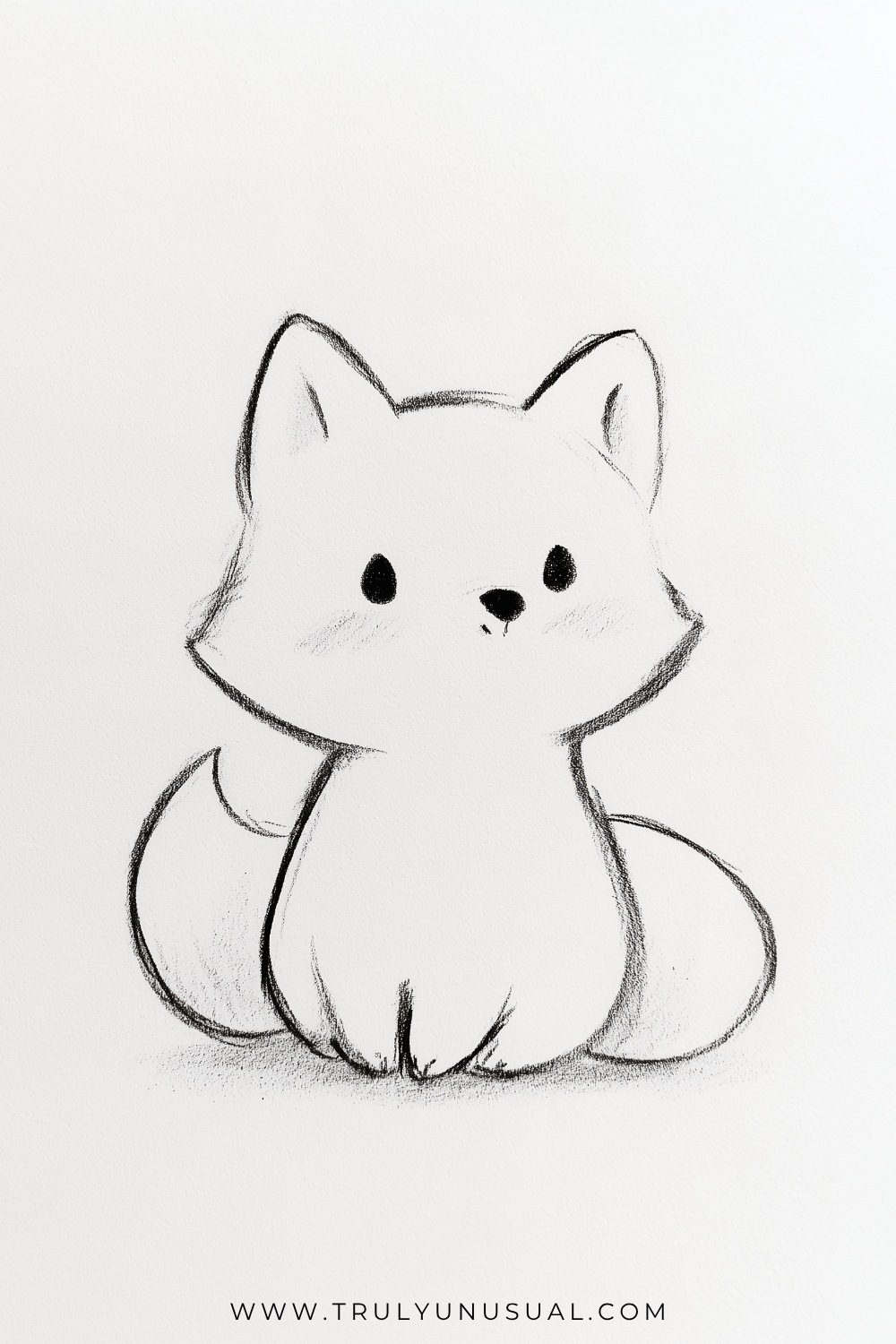
Wide cheeks and tall pointed ears give this fox its shape before you add any fur markings.
Keep the face broader than the neck, then bring the body outward again into a rounded seated pose. The large tail curls around beside the fox, with a curved line marking its pale tip.
A little shading beneath the chin and around the paws is enough to add depth while preserving the light, simple look.
Round Little Bird With Wispy Feathers
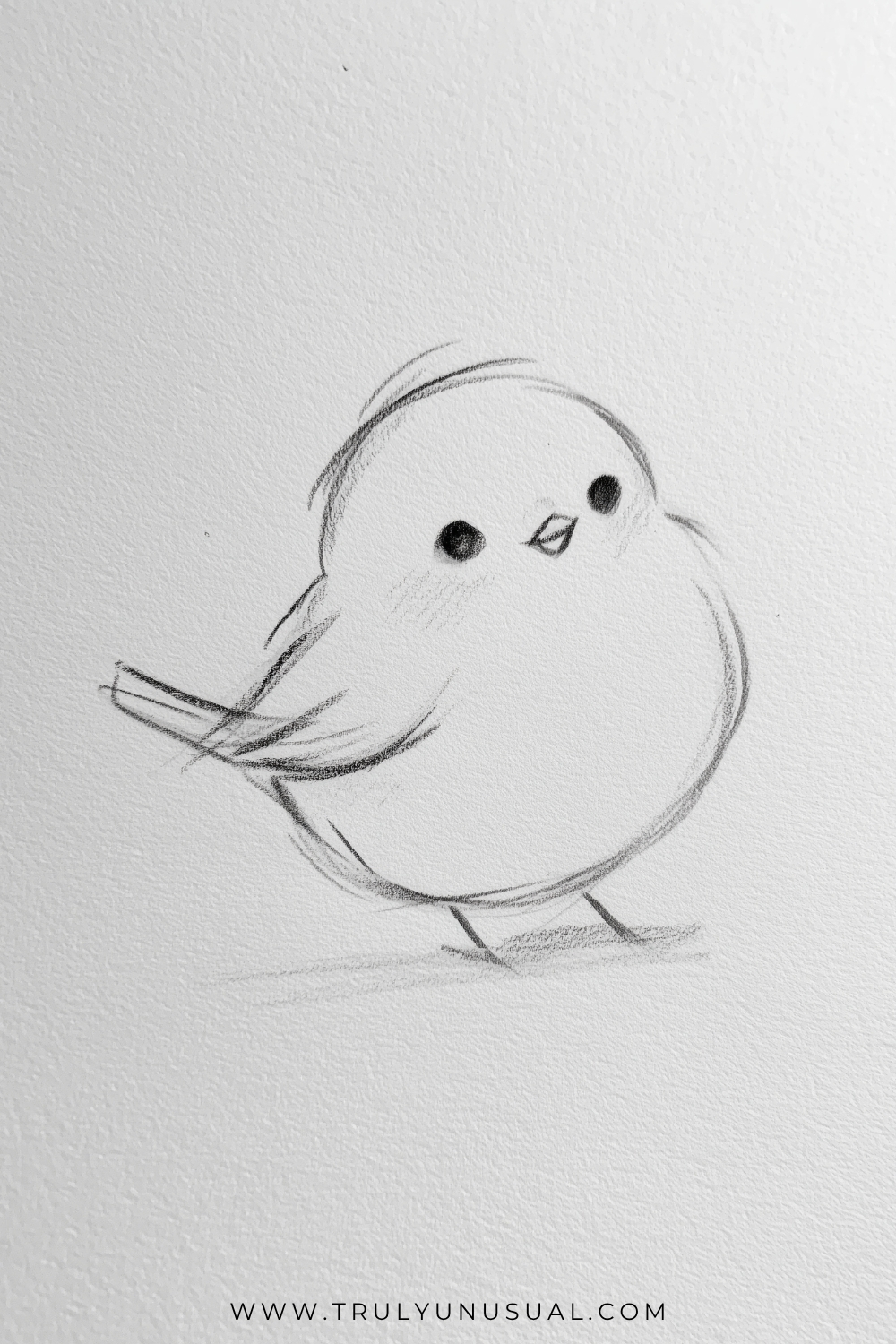
This bird is almost as round as a ball, with a small tail balancing the shape on one side.
Lightly draw the body first, then place the wing across it with a long, shallow curve. A few loose strokes on the crown and wing are enough to suggest feathers.
Keep the legs thin and angle the tiny feet along the ground, adding just a faint shadow beneath the bird.
Little Seal With Tiny Flippers
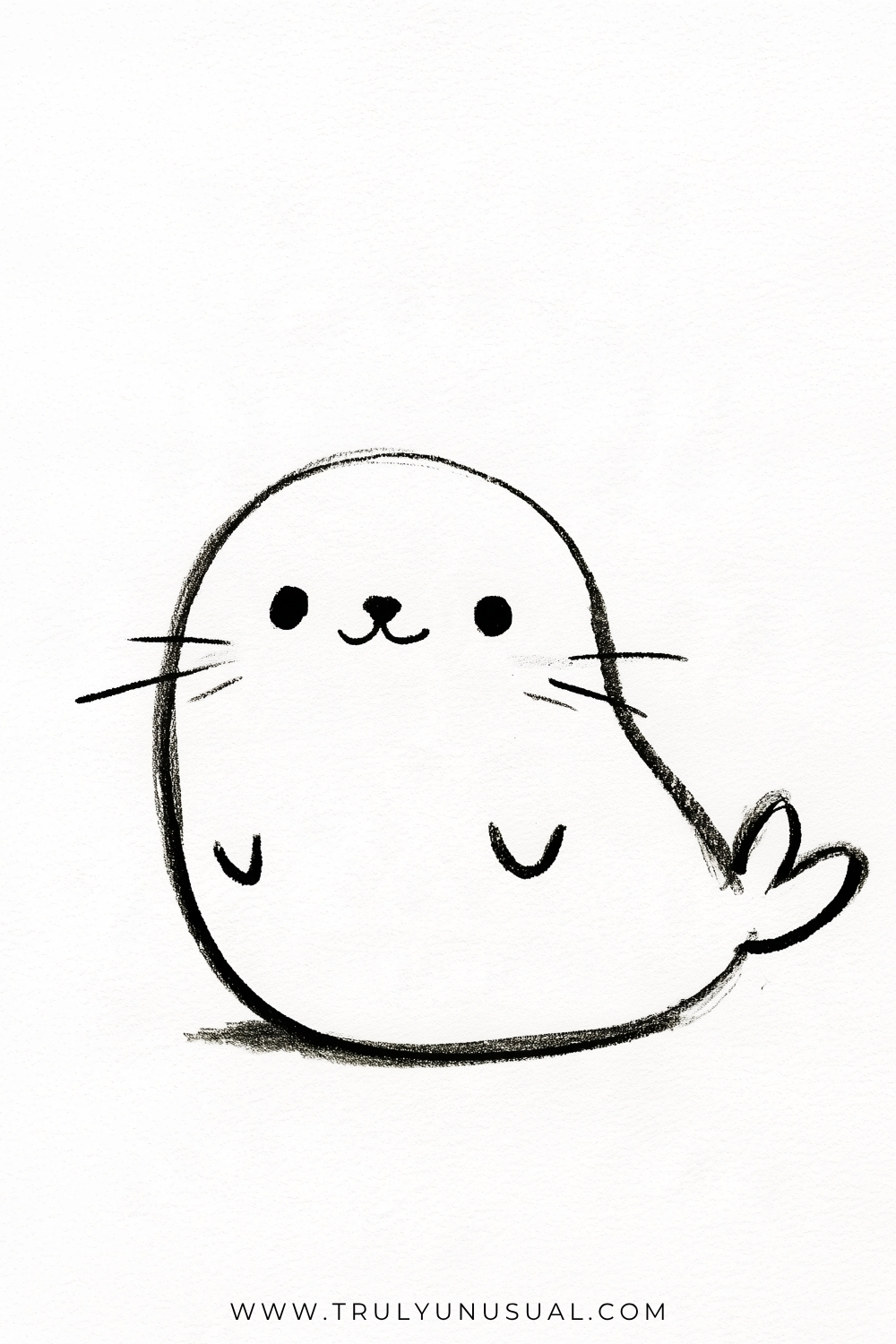
The seal’s body is one broad, rounded shape that tapers gently toward the tail.
Try drawing that outside edge before adding any facial details, keeping the underside fairly flat so it looks settled on the ground. Two small U-shaped marks suggest the front flippers without interrupting the outline.
Add a little nose, a curled mouth, and fine whiskers, then darken the bottom edge just enough to anchor the drawing.
Happy Frog With Big Eyes
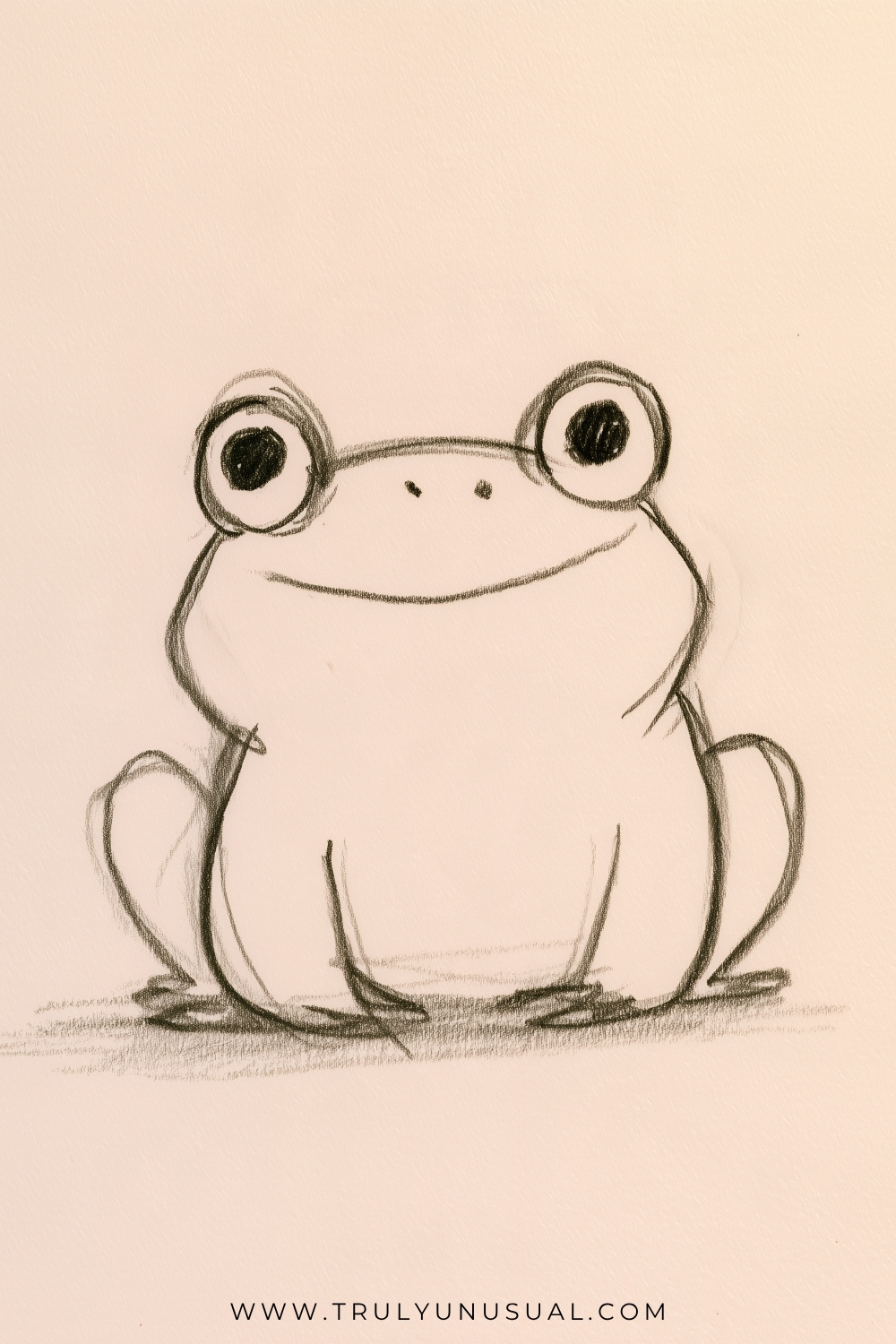
Start with the two raised eyes, leaving a gap between them for the gentle curve across the top of the frog’s head. Its wide cheeks narrow into a plump body, with bent hind legs showing on either side. Draw the long front legs down toward the ground and keep the toes as a few small points.
The broad smile can stay very light – it doesn’t need to be as dark as the pupils.
Floppy-Eared Puppy
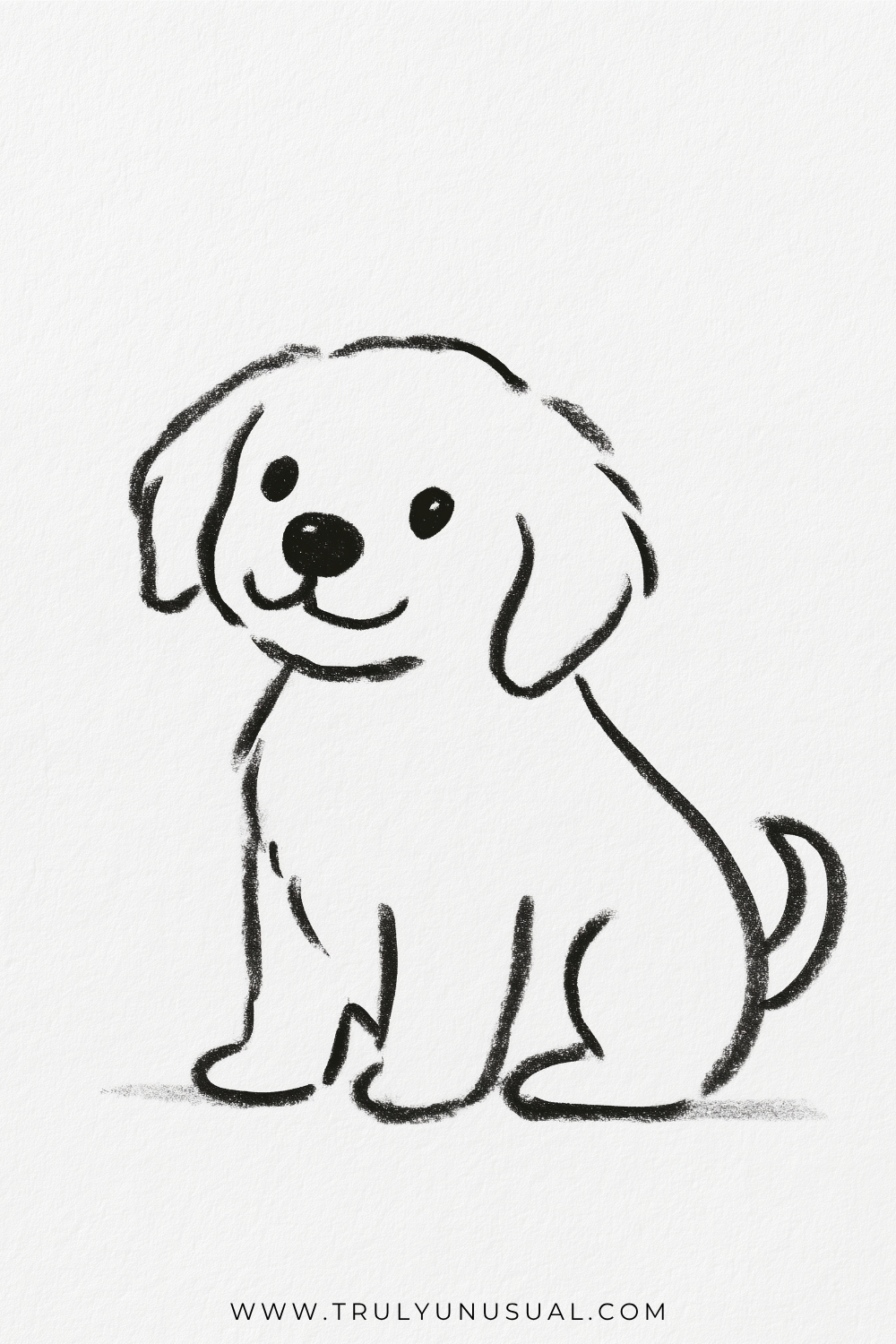
A slight head tilt makes this puppy look as though it’s listening.
Sketch the head at an angle, then let the floppy ears hang at slightly different heights to match. The front paws sit side by side, while the curved hind leg helps show that the dog is seated.
Keep the nose darker than the surrounding lines, and leave a tiny white spot in it for a simple highlight.
Simple Sitting Cat Doodle
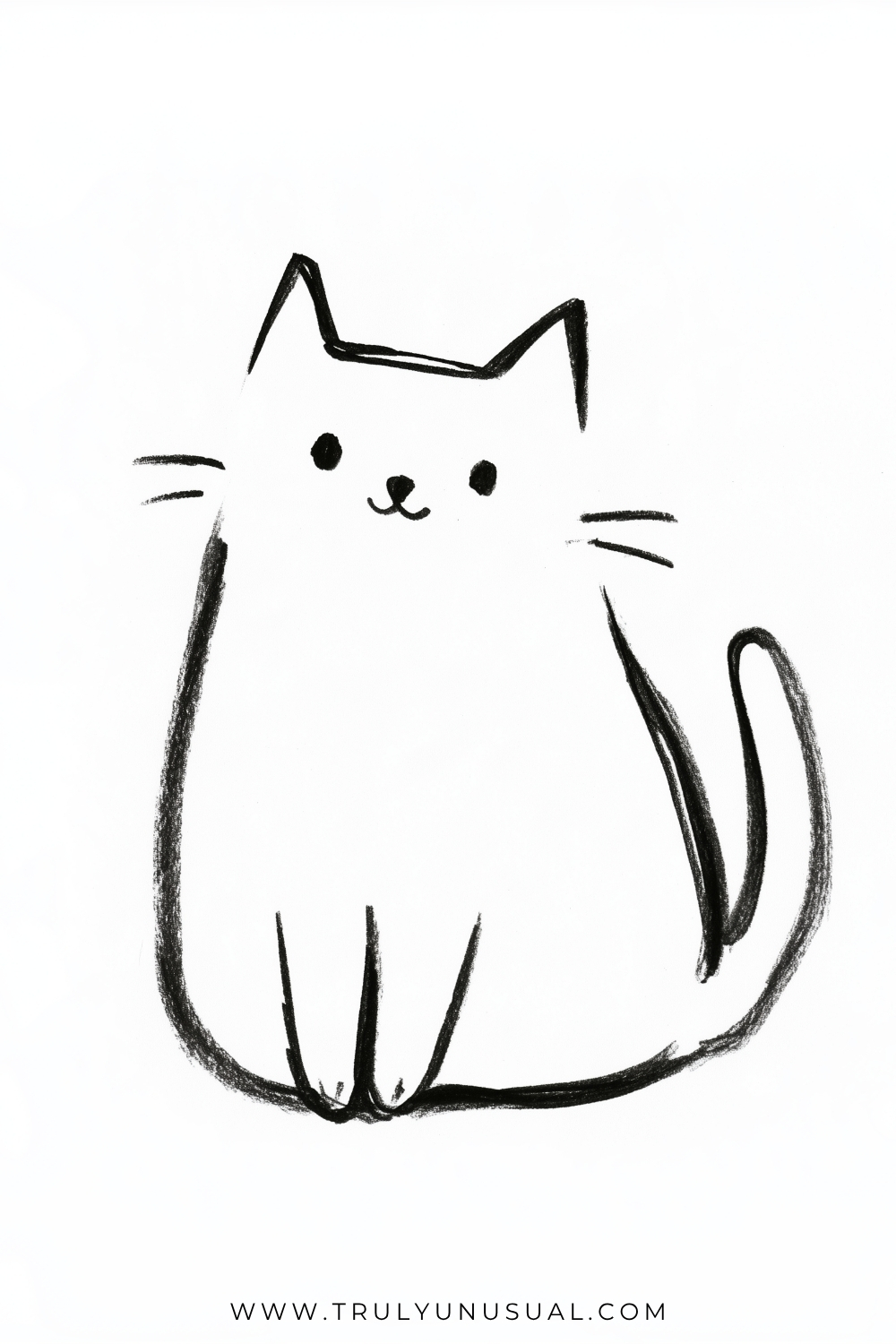
This is a good cat to try when you want to draw without spending much time on shading.
The ears lead straight into a broad body, so you can build most of the silhouette with a few long lines. Add two narrow front legs near the center, then curve the tail up beside the cat.
Small eyes, a triangular nose, and a couple of whiskers on each cheek are enough to finish the face.
Round-Eyed Tabby Kitten With A Tiny Heart
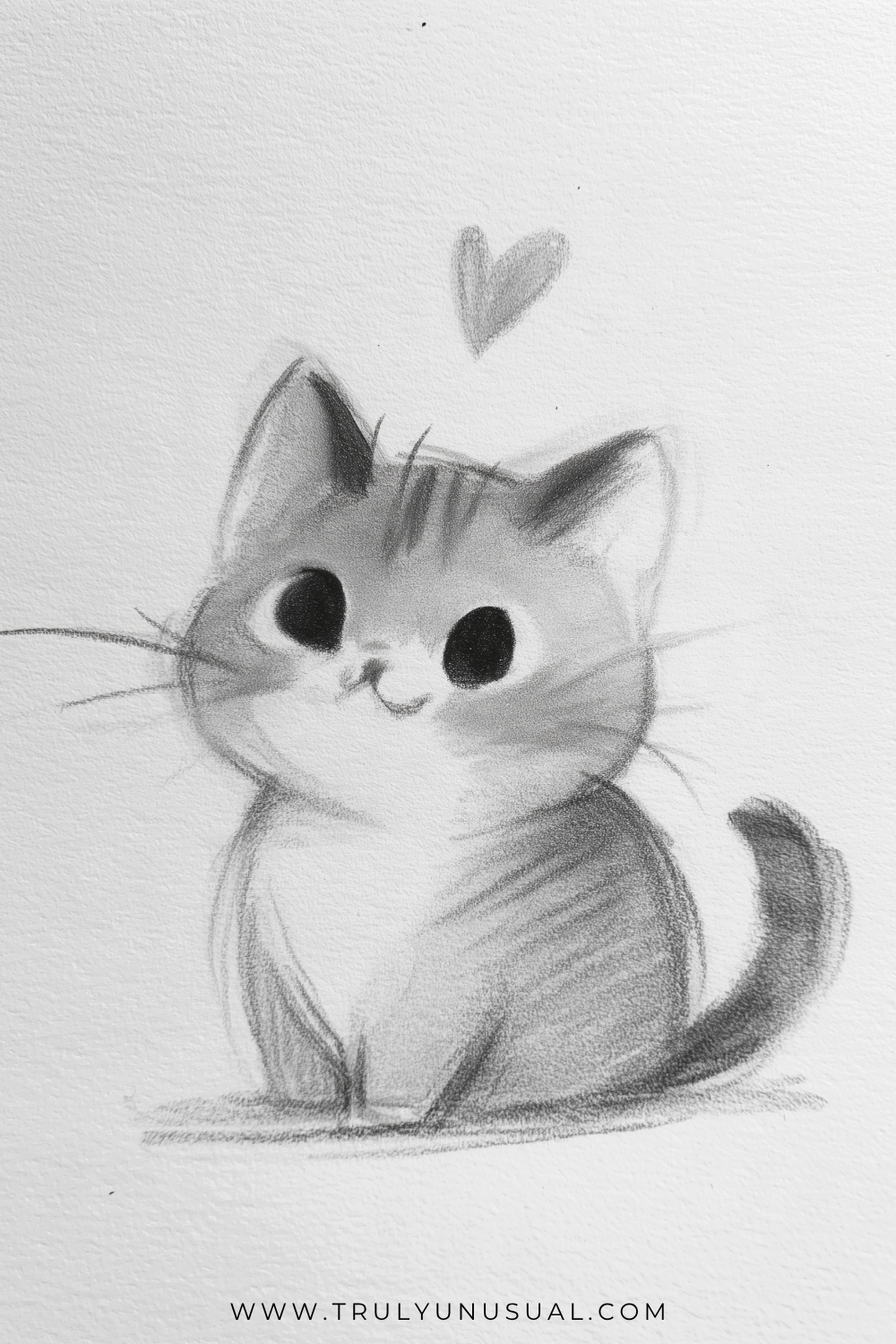
The oversized eyes are the first thing you notice about this tabby kitten.
Draw their outlines lightly and leave a pale border around each one before shading the surrounding fur. A few forehead stripes and diagonal marks across the sides suggest the tabby pattern without covering the whole body.
Keep the chest white, sweep the tail upward, and add the little heart above the ears once you’re happy with the main sketch.
Tiny Bat With Open Wings
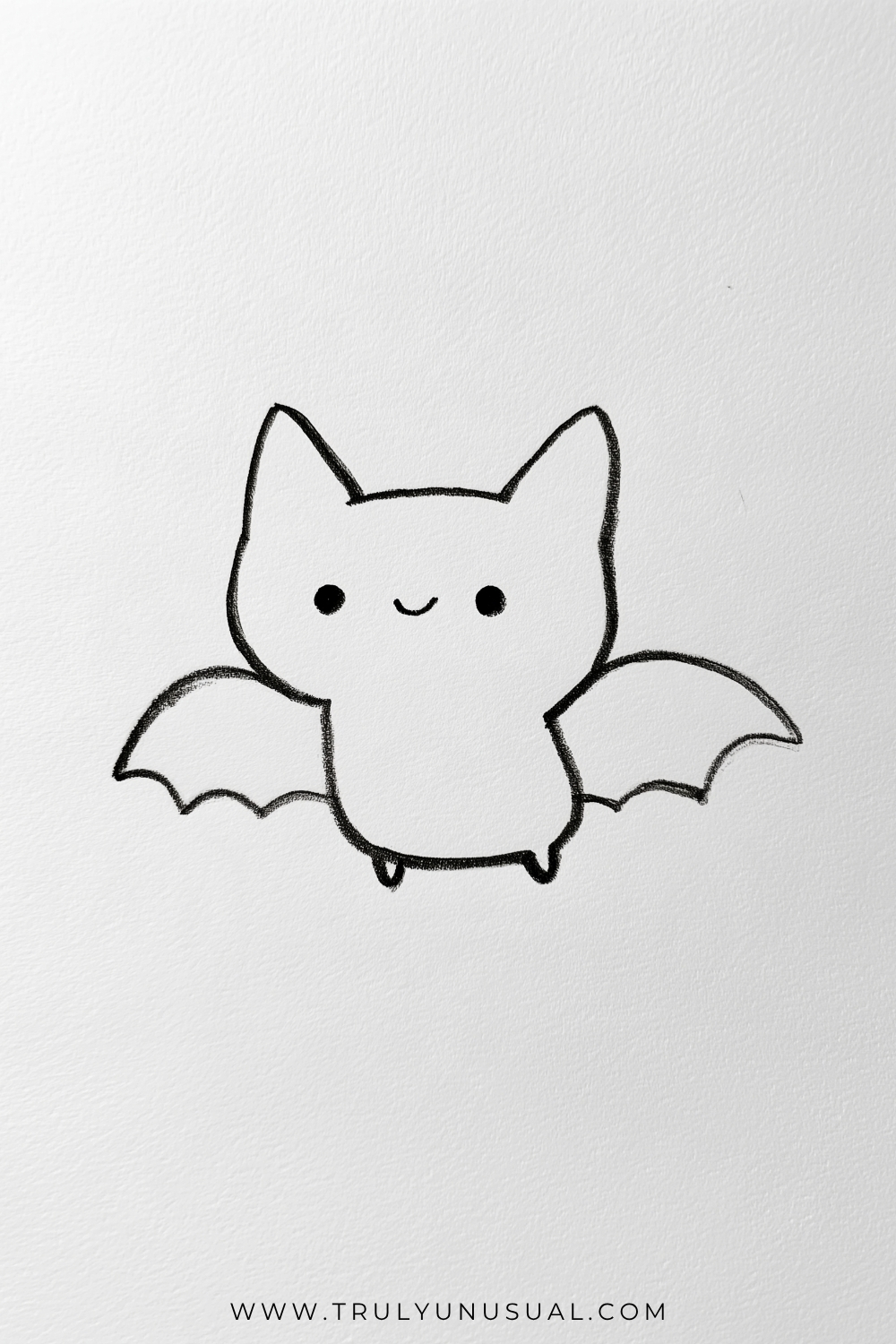
This bat is mostly a few bold shapes, with tall ears above a short body and wings opening to either side.
Draw both upper wing curves before adding the scalloped lower edges, checking that they reach roughly the same distance. The little feet can be simple rounded points underneath.
Leave the inside blank for a clean doodle, or shade the wings lightly if you want a bit more contrast.
Fluffy Raccoon With A Ringed Tail
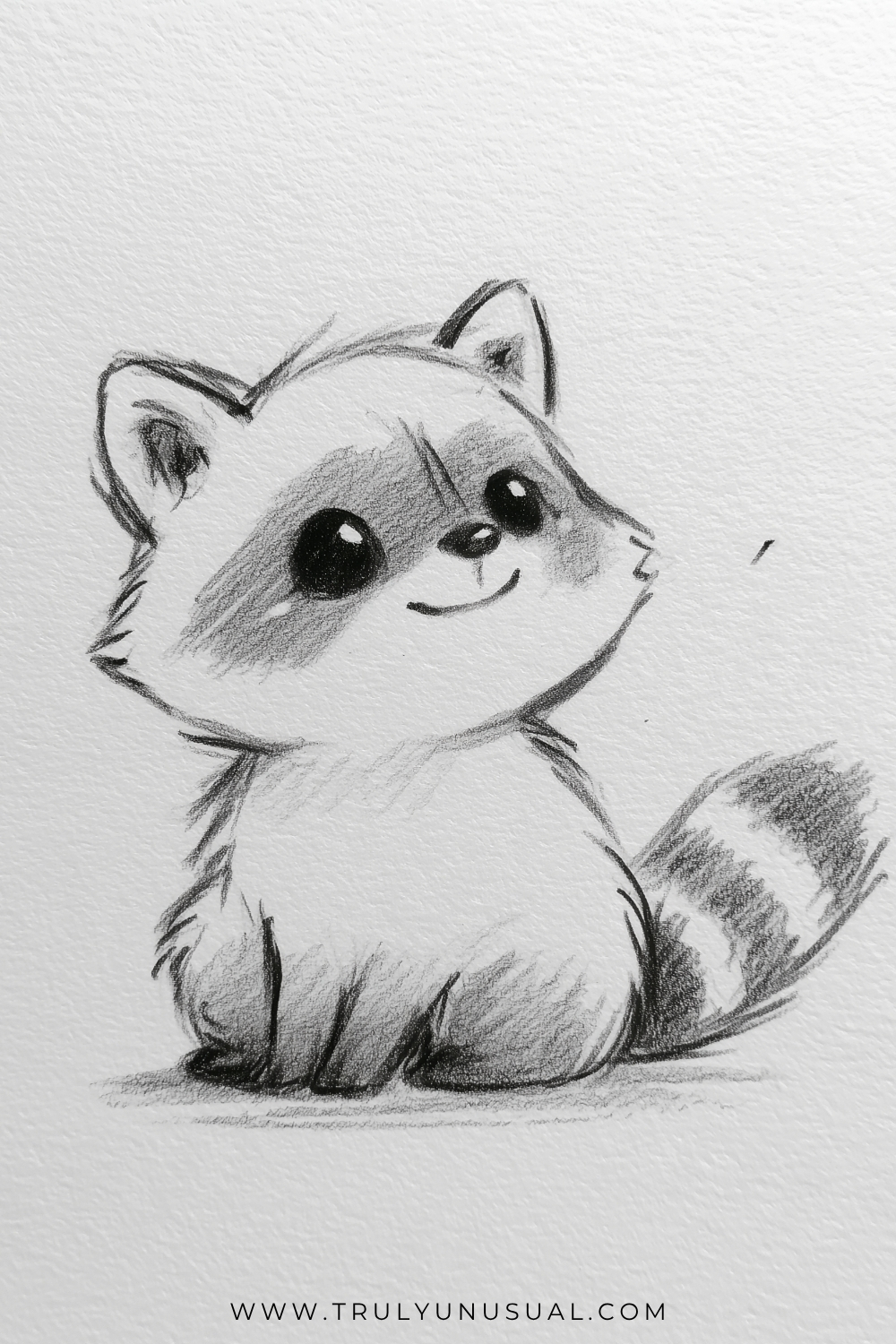
The dark eye mask and striped tail make this raccoon recognizable even with its very simple seated body.
Sketch the mask lightly across the face, leaving the muzzle and forehead pale. For the fluffy edges, use small groups of pointed strokes rather than outlining every hair.
Curve the tail upward beside the body and shade the bands to follow its shape, keeping the lighter stripes visible.
Smiling Spider Doodle
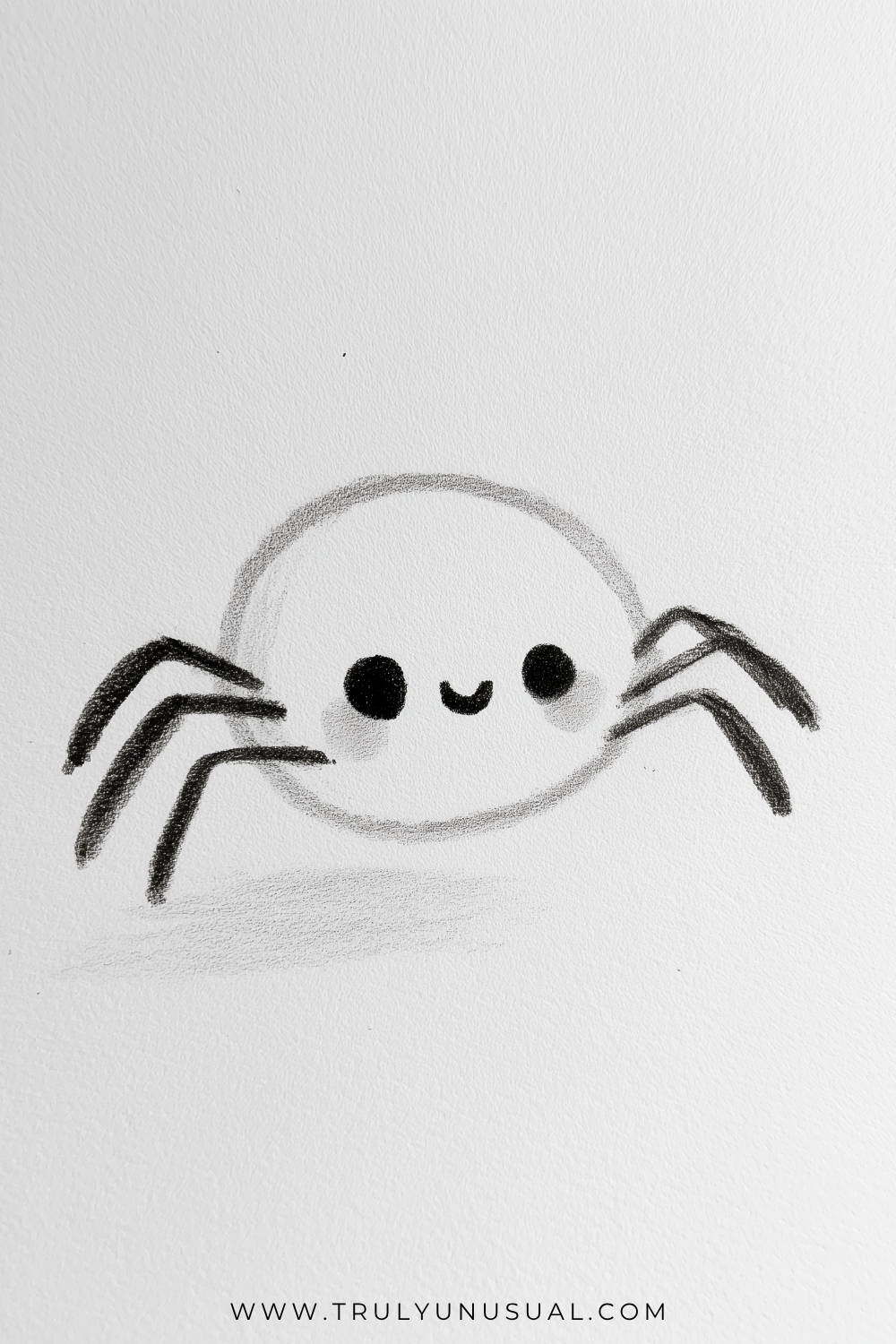
A round body and a tiny smile give this spider a gentle, cartoon look.
Lightly sketch the bends in the legs before thickening them, so you can adjust the spacing on each side. The reference keeps the legs simplified; add a fourth leg on each side if you want your spider to have the full eight.
Faint cheeks and a soft shadow underneath are all the shading this little doodle needs.
Wide-Eyed Baby Deer
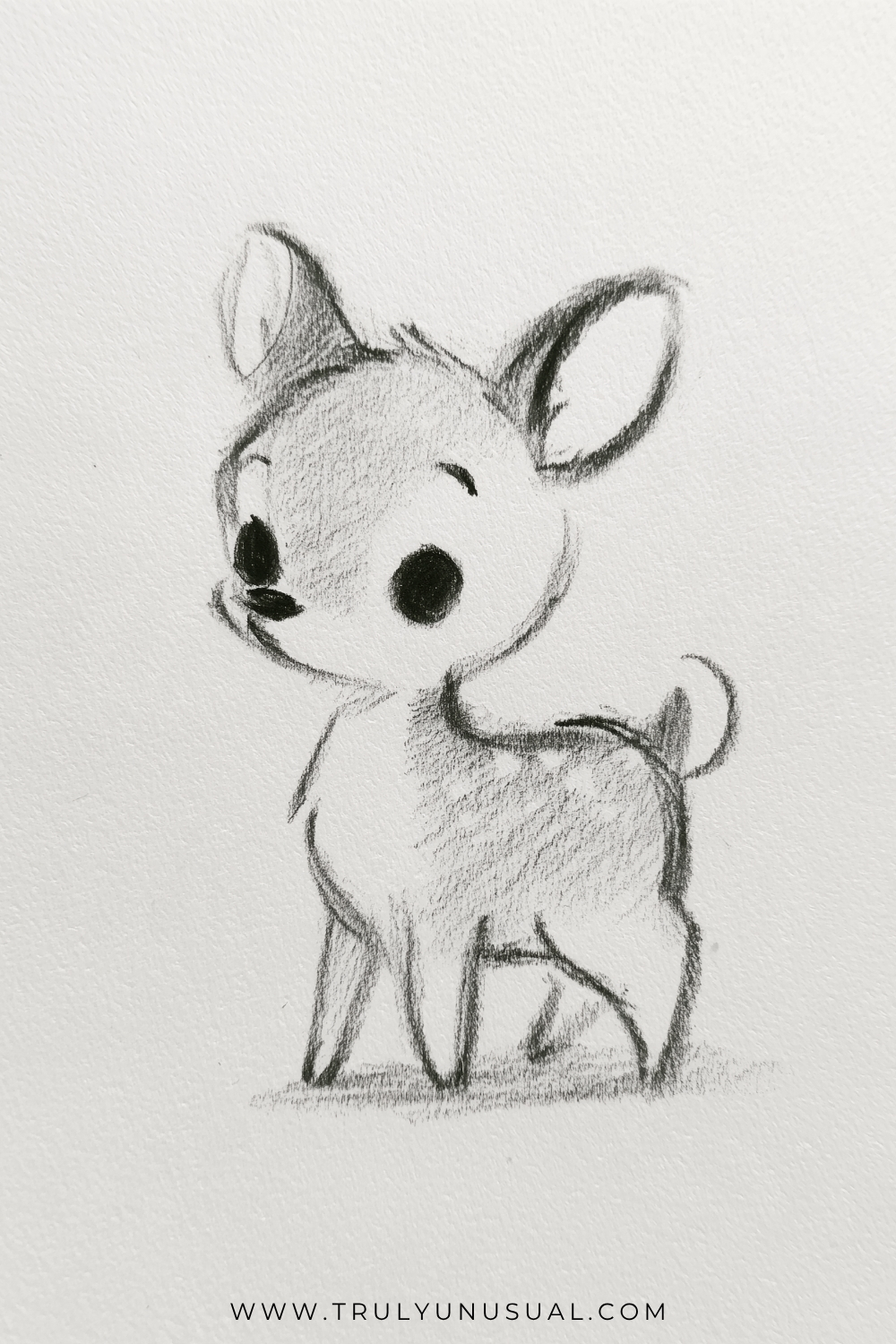
The delicate legs need a little more care than the big ears in this baby deer sketch.
Mark where all four feet will meet the ground before darkening the legs, keeping the body small above them. The head turns slightly to one side, so the nose sits toward the edge rather than directly in the middle.
Finish with a short raised tail and faint shading under the belly and around the neck.
Round Little Fish With Flowing Fins
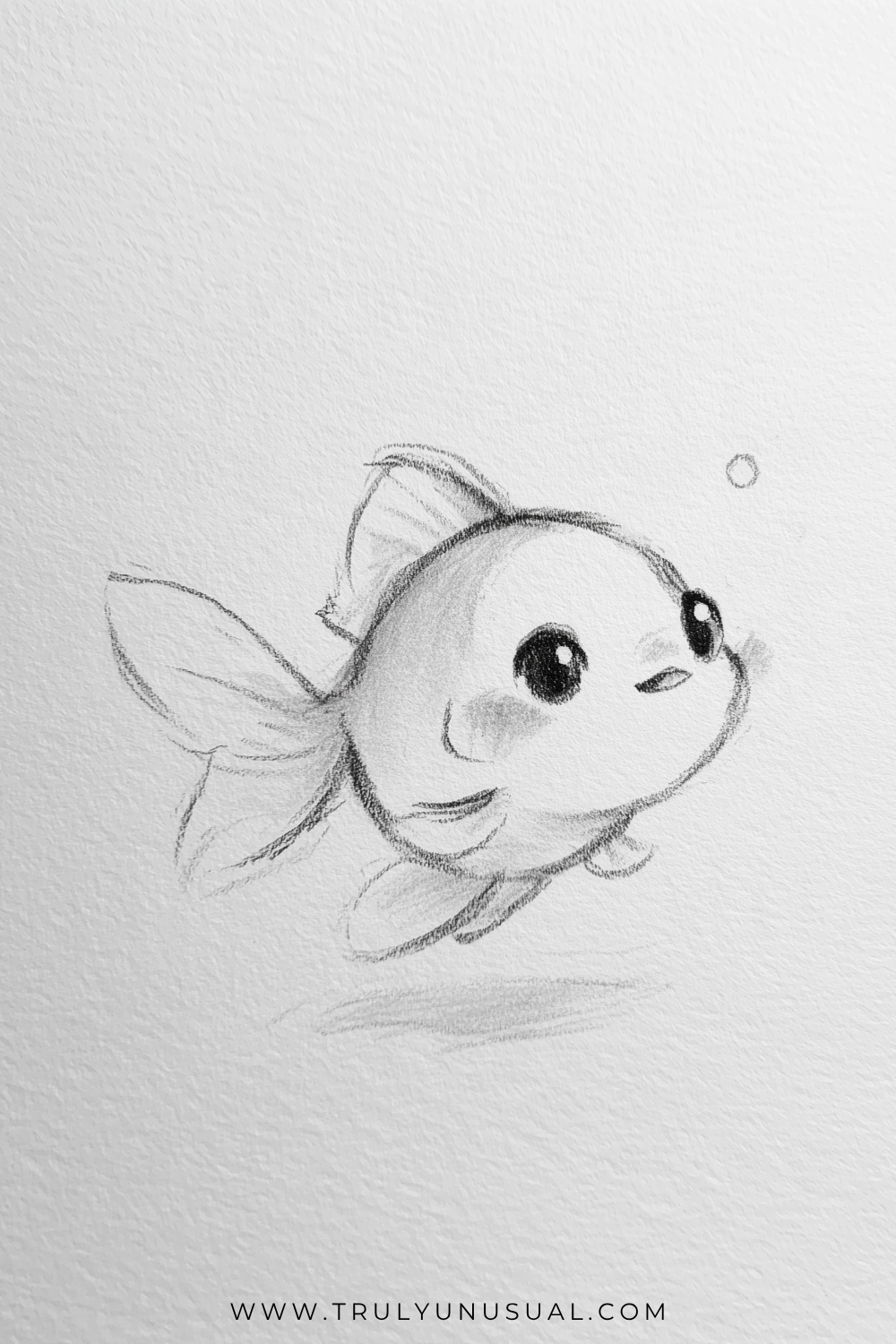
There’s no need to draw individual scales on this fish; the full cheeks and flowing fins give it plenty of character.
Begin with a rounded body, leaving the back open while you work out where the tail will attach. Use longer curves for the tail and shorter ones for the small fins underneath.
A darker upper edge and pale belly will help the fish look round without heavy shading.
Friendly Crocodile With A Wide Smile
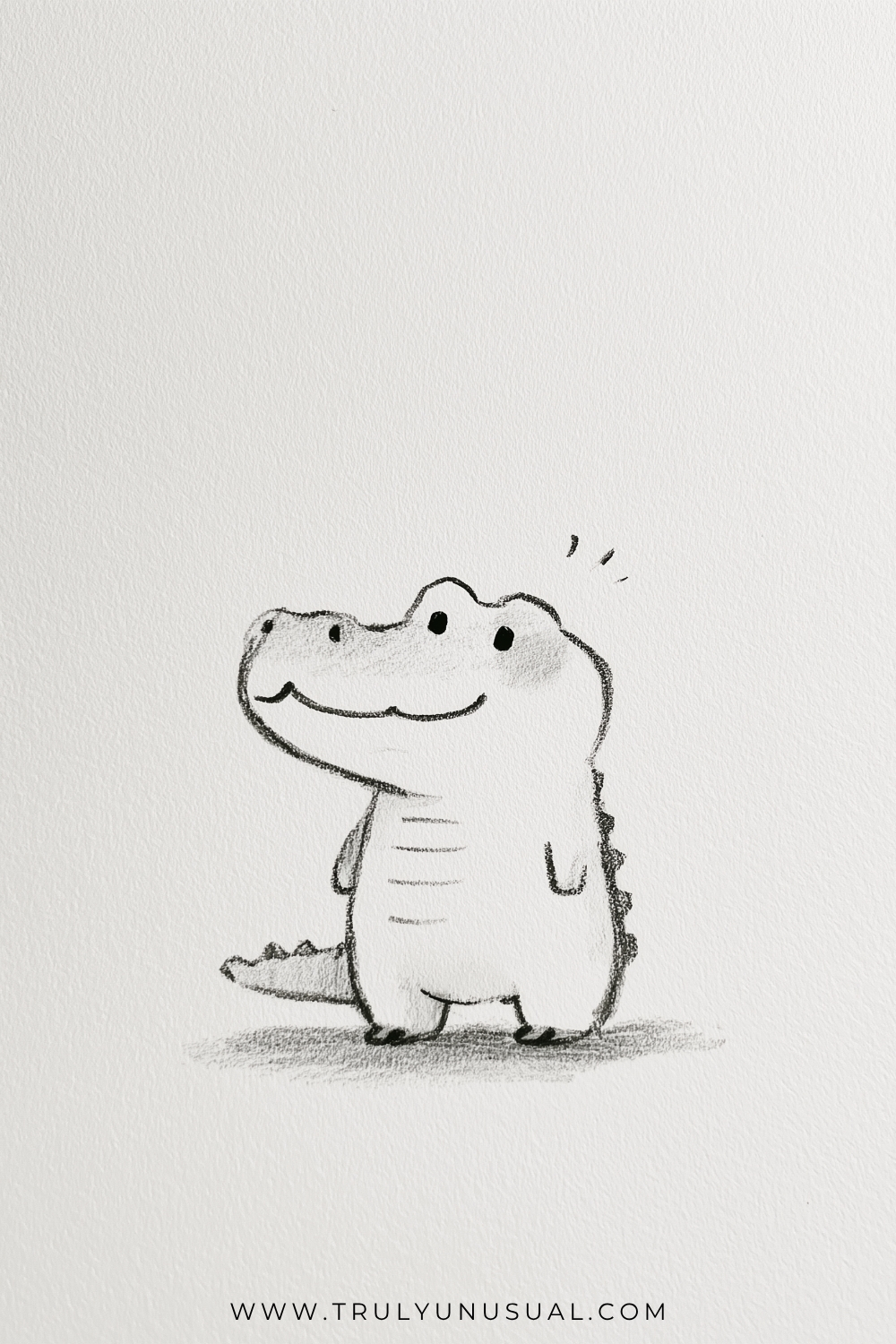
A wide snout is the key feature in this little crocodile, so sketch its shape before adding the upright body.
The eyes sit along the top of the head, with a long, shallow smile underneath. Keep the arms short and use just a few horizontal lines across the belly.
Small bumps down the back and tail provide enough reptile detail without changing the friendly cartoon style.
Little Mouse With A Curling Tail
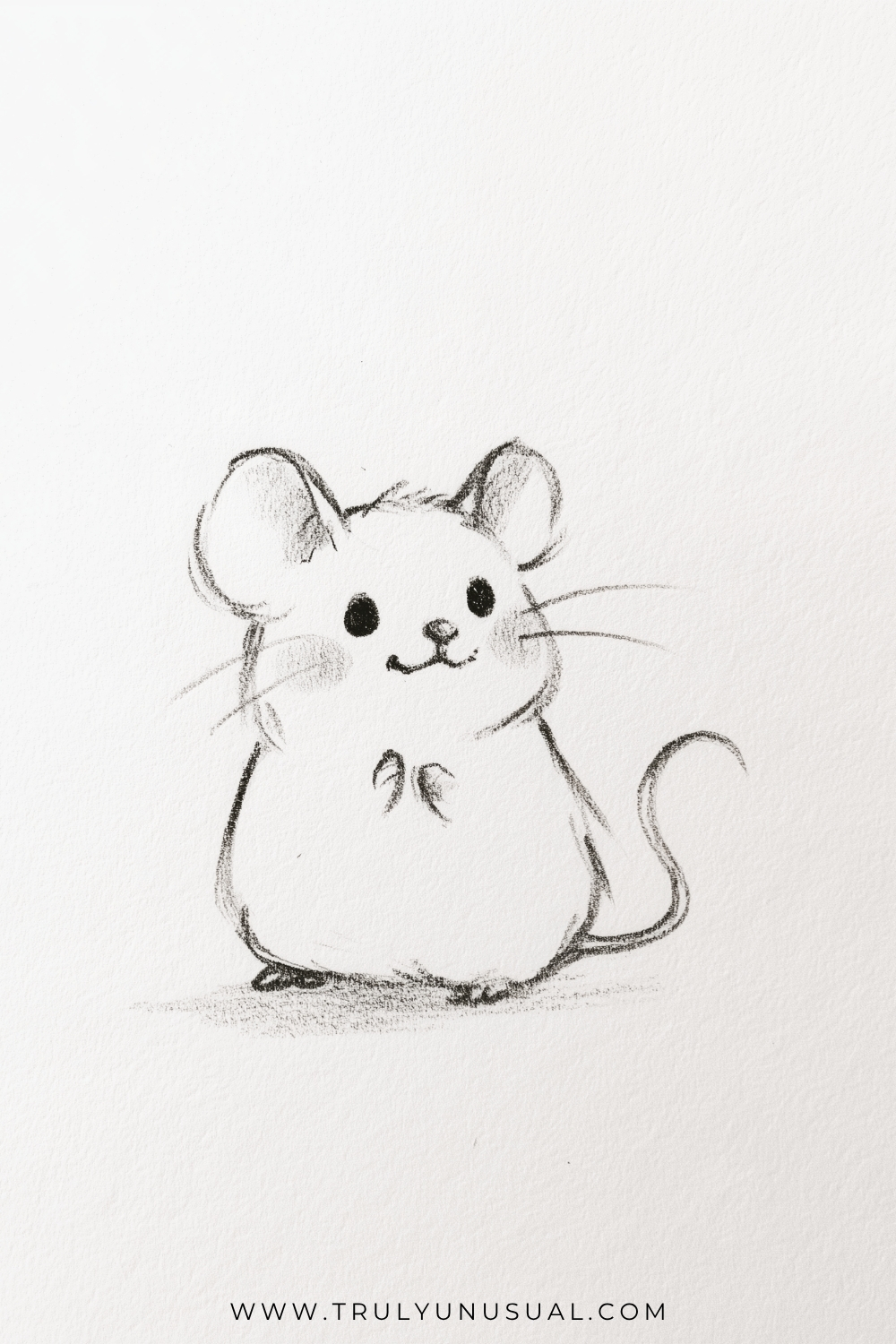
Save some space beside this mouse for the thin tail curling upward from the ground.
Its round ears sit high on a small head, above a plump body and two little paws held close together. A few wispy strokes around the cheeks and crown suggest fur without making the outline too busy.
Use a light touch for the whiskers, then darken the nose and eyes so the face stays clear.
Big-Eyed Baby Turtle
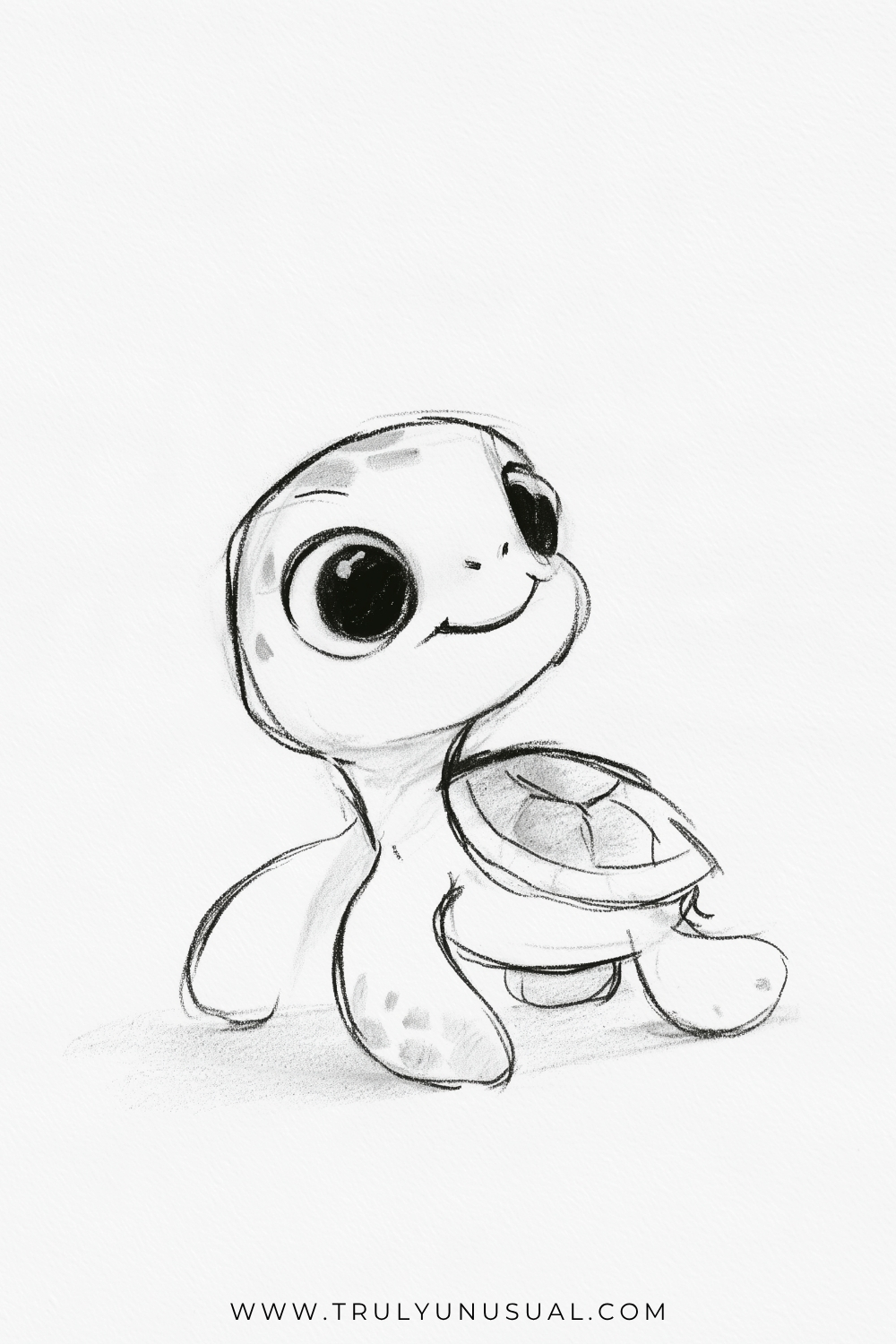
This turtle’s oversized head and wide eyes give it a curious, almost storybook expression.
Leave the neck visible between the head and shell so the pose doesn’t become one crowded shape. Draw the shell as a tilted dome, then fit a few large sections inside instead of squeezing in lots of tiny ones.
The flippers can stay broad and rounded, with light shading beneath the shell to show where it overlaps the body.
Happy Snail With A Spiral Shell
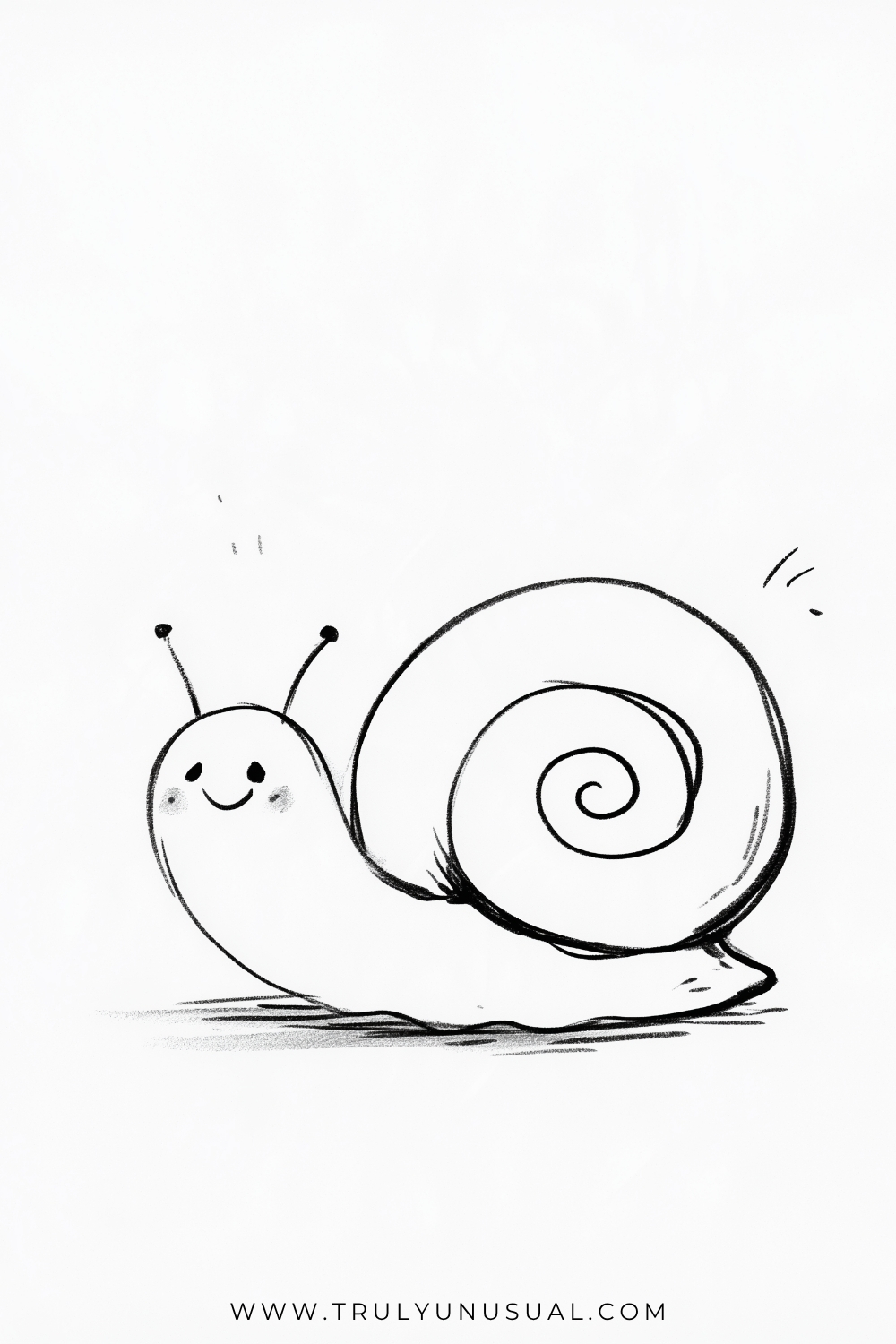
The spiral shell is the part to take slowly in this snail drawing.
Start with a loose outer circle, then curve inward while leaving a fairly even gap between the turns. Its body stretches out below the shell, with a raised head and two fine feelers tipped with dots.
Keep the underside slightly wavy so the snail doesn’t look as though it’s sitting on a rigid straight line.
Cheerful Ladybug With Rosy Cheeks
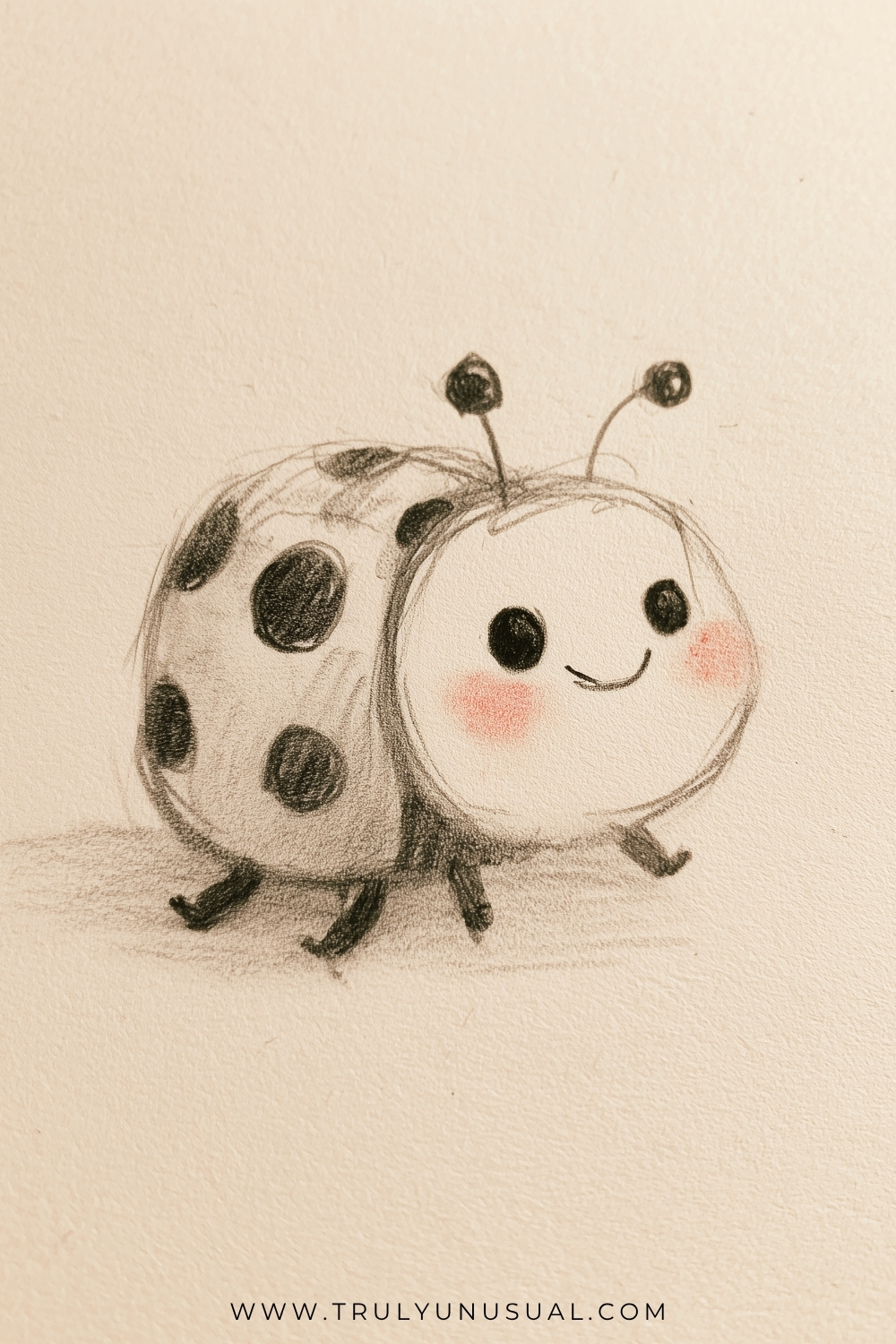
This ladybug has a large face beside a domed, spotted shell, rather than the usual view from above.
Sketch those two rounded shapes together before adding the little legs underneath. Space the spots unevenly across the curved wing case, letting a few sit near the edge.
Soft cheek shading and a small smile make it feel friendly, while darker spots give the pencil drawing some contrast.
Tiny Whale With A Curved Tail
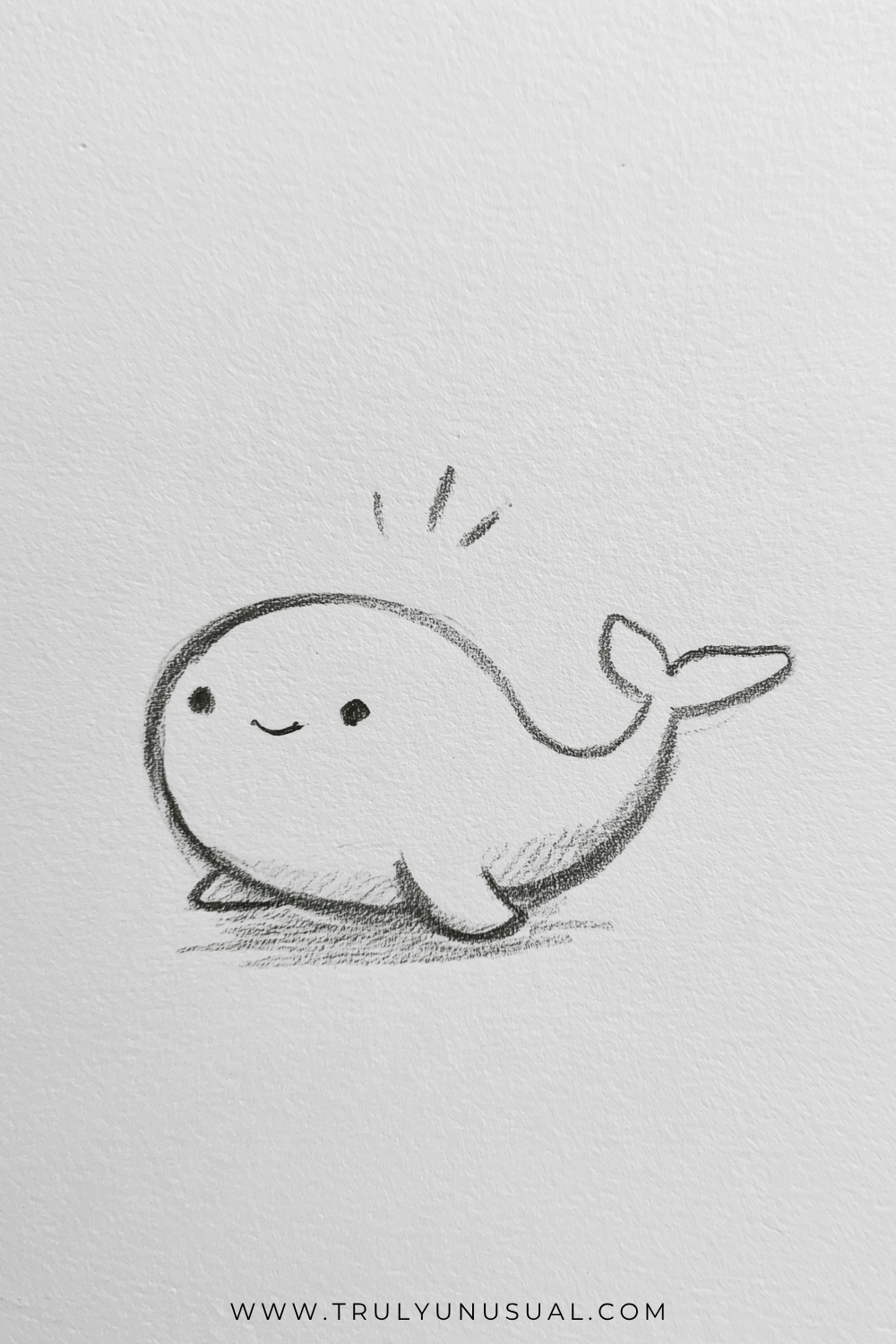
A single rounded curve forms most of this little whale’s body.
As you reach the back, narrow the shape and sweep it upward into the tail, leaving room for both pointed flukes. Add the visible flippers below the body and keep the face close to the rounded front.
A few short marks above the head give the drawing a playful touch without adding much extra detail.
Fluffy Bunny Sitting Upright
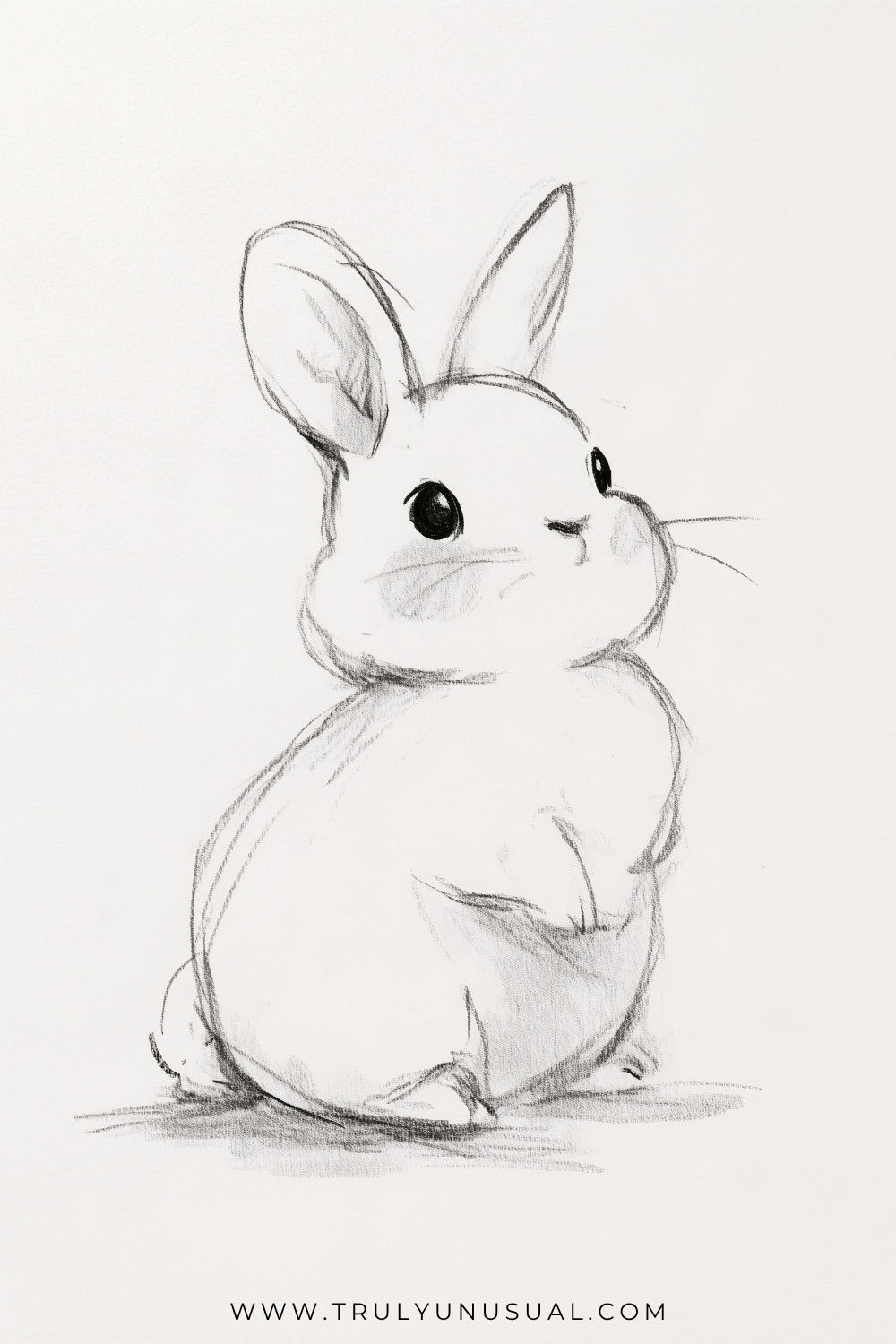
Long ears make this bunny easy to recognize, but they don’t have to stand at exactly the same angle.
Let one lean slightly outward to give the pose a more relaxed feel. Under the rounded head, sketch a plump body with a small forepaw resting against the chest.
Gentle shading along the back, beneath the chin, and around the feet will suggest soft fur while keeping the front of the bunny light.
Simple Butterfly With Sweeping Wings
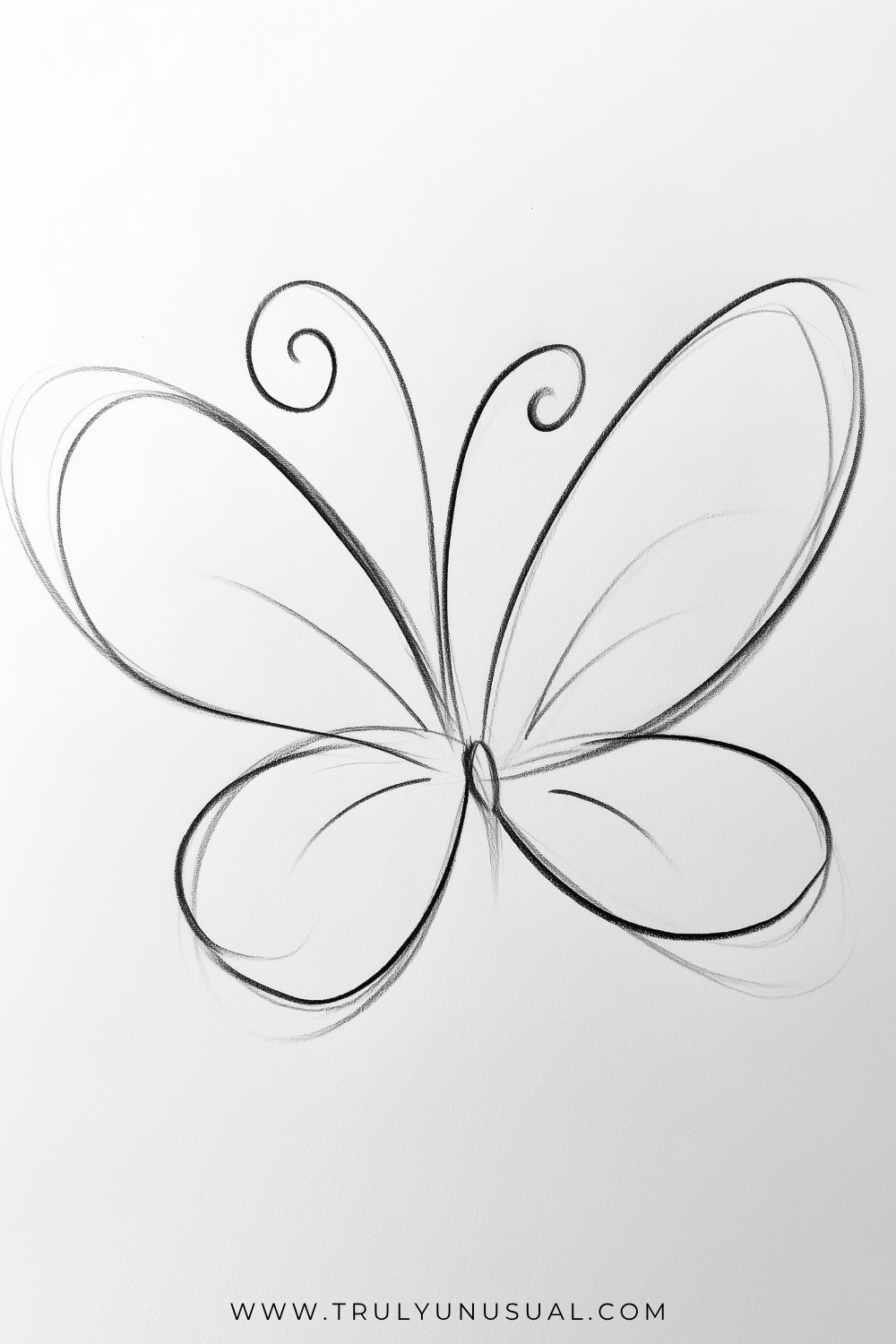
Draw the butterfly’s narrow body first so you have a center point for all four wings.
The upper pair stretches upward and outward, while the smaller lower wings curve down like rounded petals. You can lightly compare the height and width on each side without trying to make them perfectly identical.
A few flowing lines inside the wings and two curled antennae keep the finished drawing light and open.
Baby Panda With Round Paws
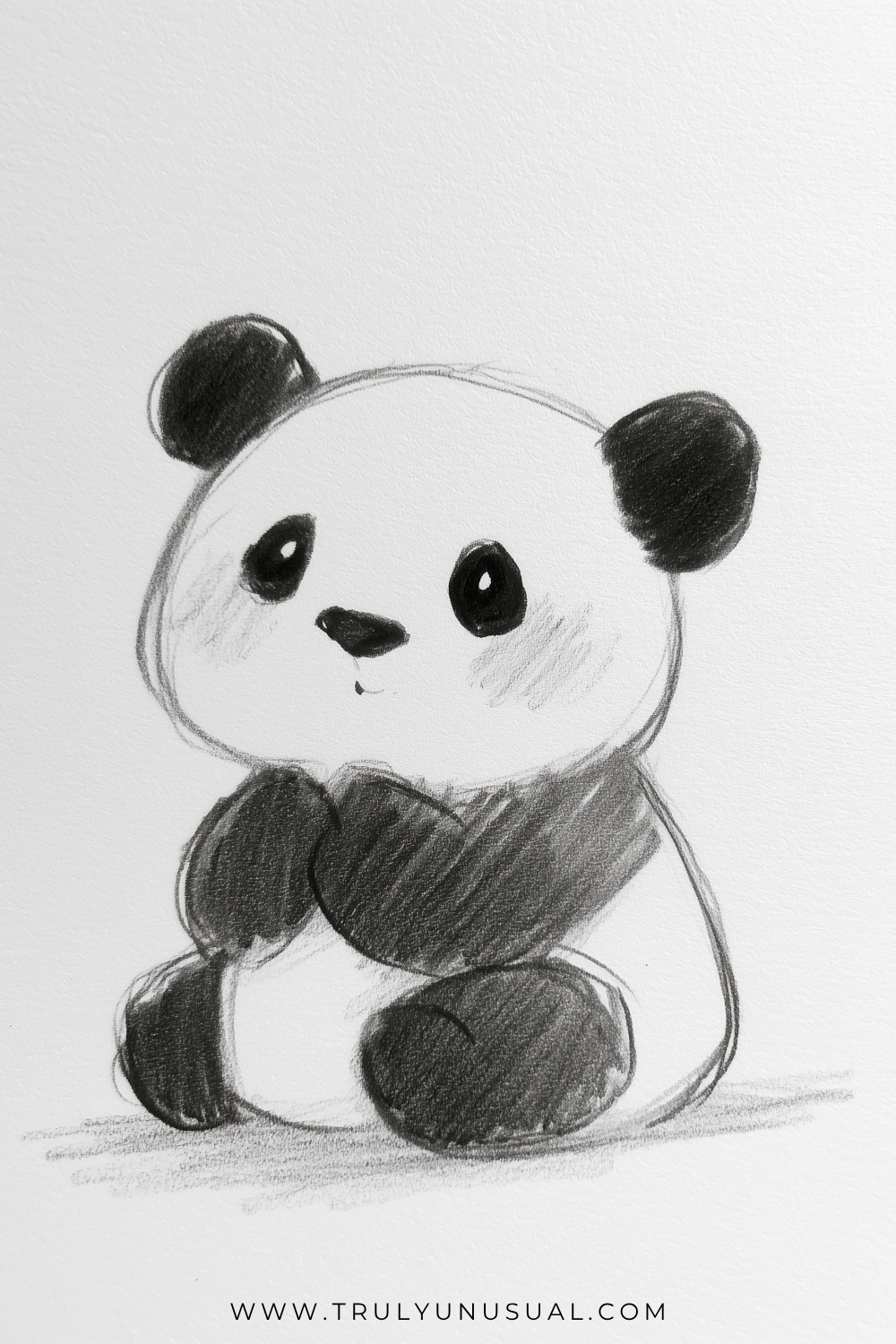
The contrast between dark paws and pale fur makes this panda satisfying to shade.
Map out the head, belly, and seated legs first, then lightly mark where the dark areas belong. Build the shading in layers rather than pressing hard straight away, leaving little highlights in the eyes.
Notice how the front paws rest against the body while the round feet point toward the viewer.
Busy Little Bee
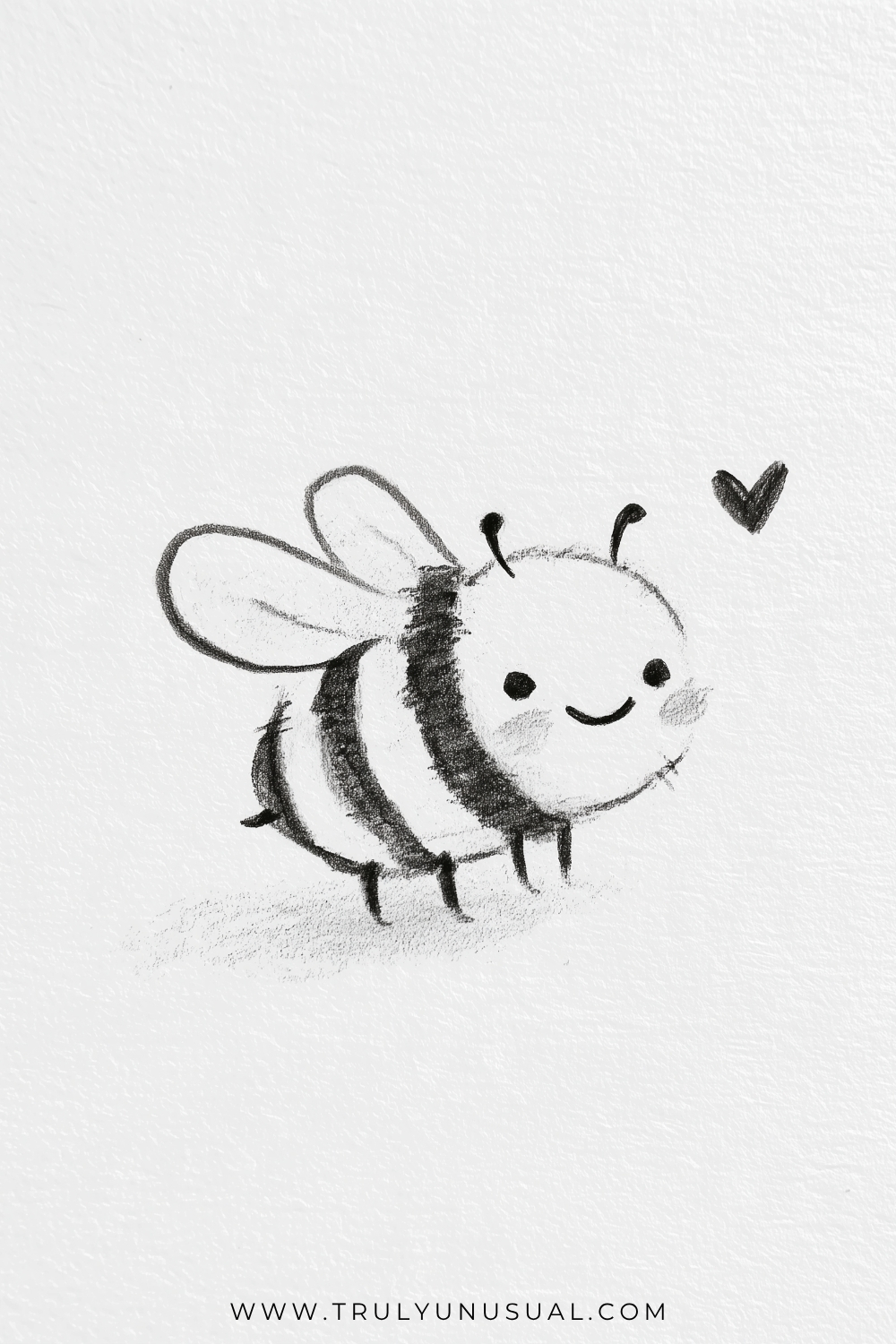
This bee looks as though it has paused in midair, with its little legs dangling below its striped body.
Tilt the body slightly rather than drawing it perfectly level, then attach two long, rounded wings above the back. Fill the dark stripes with short strokes, keeping the face clear and bright.
The floating heart is optional, but it makes a nice finishing touch beside the antennae.
Seated Koala With Fluffy Ears
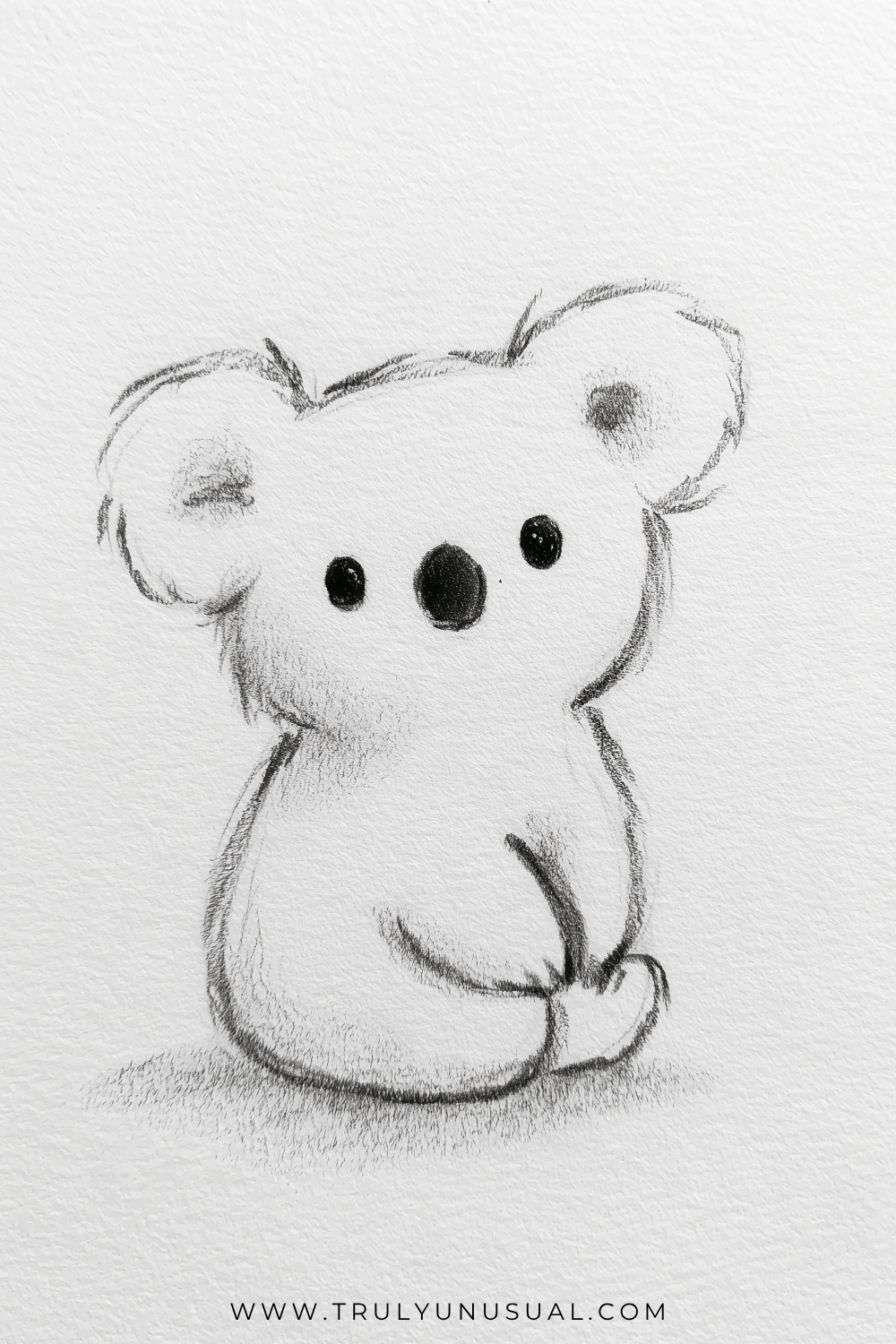
big oval nose and two fluffy ears do a lot of the work in this koala drawing.
Position those features before spending time on the smaller details, keeping the ears wide apart. The seated body can be built from a rounded back and a curved arm that leads down toward the feet.
Break up a few edges with short pencil strokes to suggest fur, especially around the ears and cheeks.
Cute Smiling Octopus
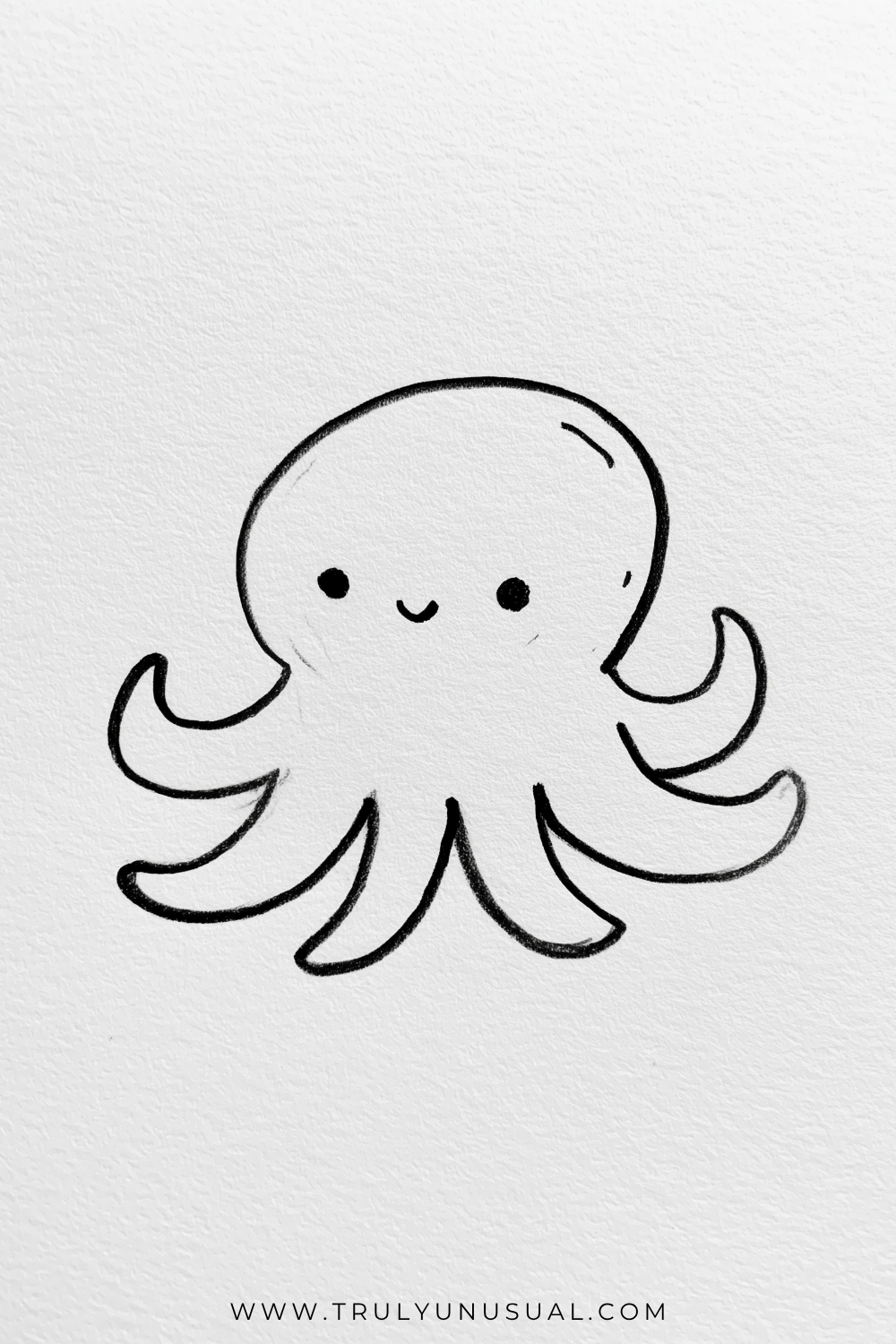
Leave a generous space around the octopus’s head before adding the curling arms.
Their alternating curves are the main thing to practice, so work lightly until you like how they spread across the page. A few arms can overlap or disappear behind others rather than all being squeezed into the same space.
Two dots and a tiny smile suit the clean outline, with no shading needed.
Cute Baby Elephant
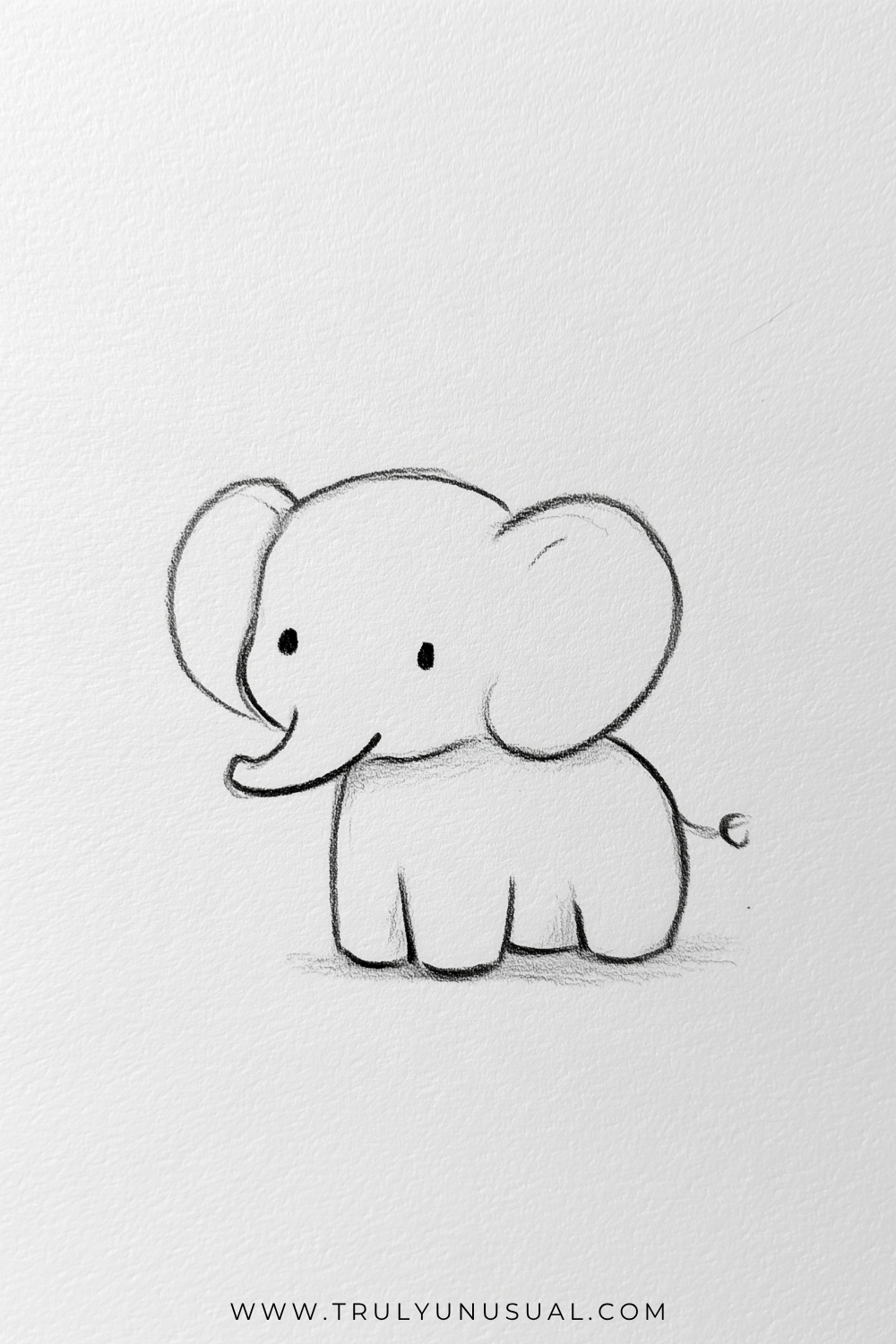
I love drawing baby elephants because their oversized ears, little trunks, and slightly clumsy proportions give them so much character, even in a simple sketch.
In this case, the oversized ears and a short, upturned trunk give this baby elephant its gentle expression.
Try sketching the head and ears first, checking that there’s enough space underneath for the compact body. Rounded upside-down U shapes help separate the legs without making them too complicated.
Finish with a little tail and two small eyes, keeping the trunk thick enough to feel connected to the face.
Squirrel With A Big Bushy Tail
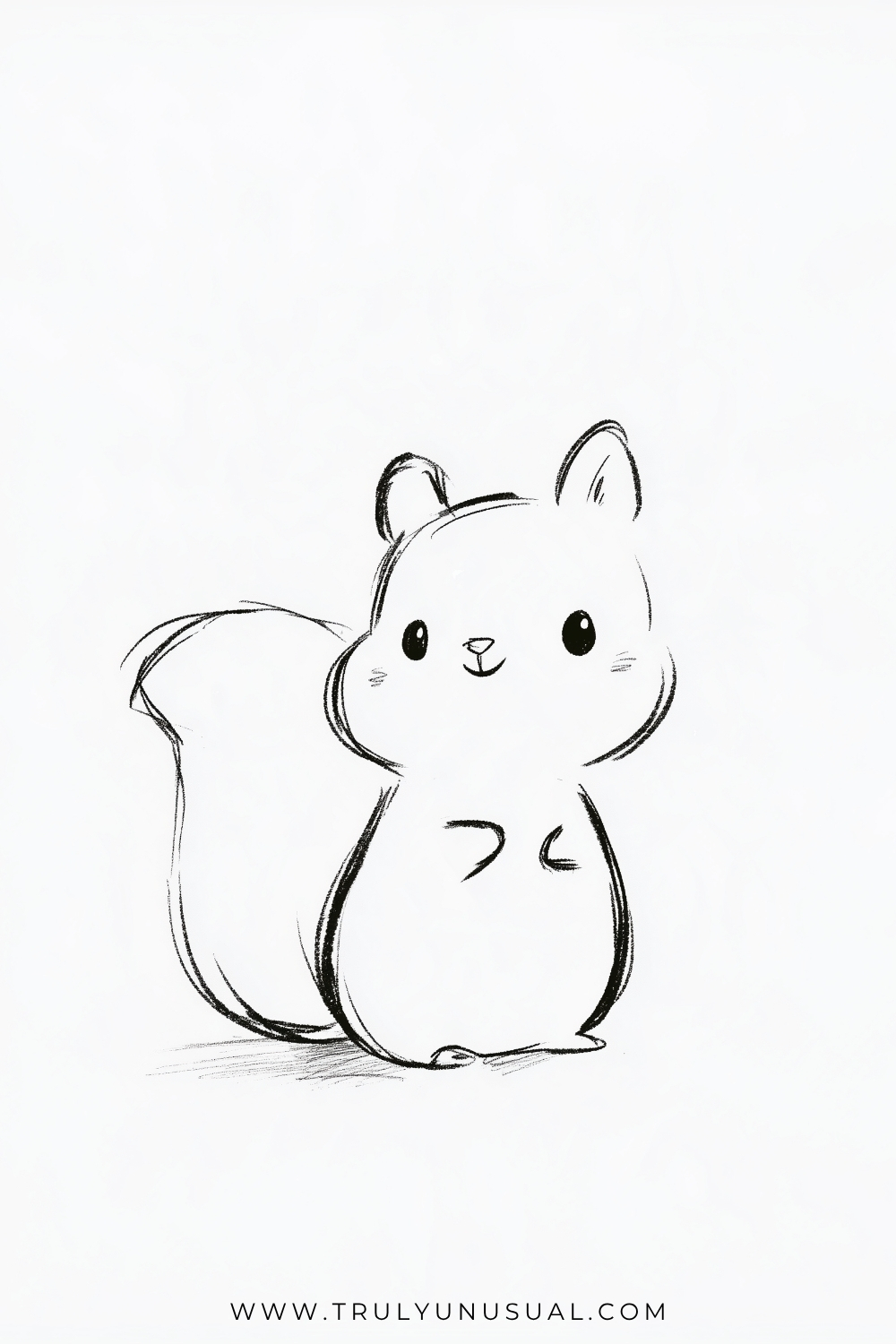
Give the tail almost as much attention as the squirrel itself – it’s the feature that makes this little outline recognizable.
Draw it rising behind the body in one broad curve, with a small point near the top to suggest fur. The squirrel’s front paws can stay as two tiny hooks against its chest.
You don’t need much shading here; the big tail, upright ears, and rounded cheeks already do most of the work.
Sitting Otter With Tiny Paws
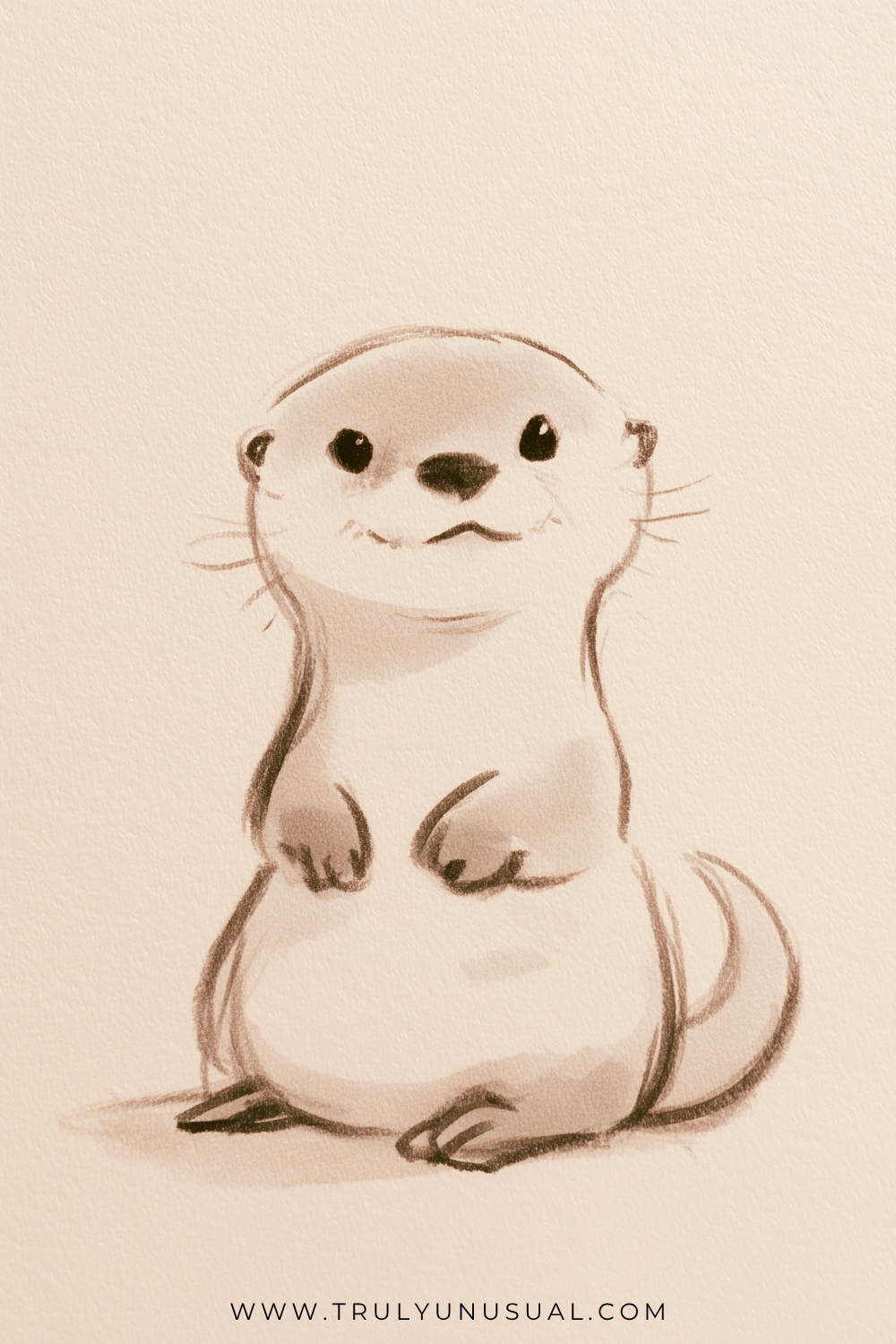
The upright pose gives this otter a curious, slightly expectant expression.
Leave plenty of room below the small head for a long torso and rounded belly, then add the little paws close to the chest. Its tail curves around behind the body, so sketch that lightly before deciding which lines should remain visible.
A darker nose, a few whiskers, and shading beneath the arms are enough to finish the main details.
Little Lamb With Cloudlike Wool
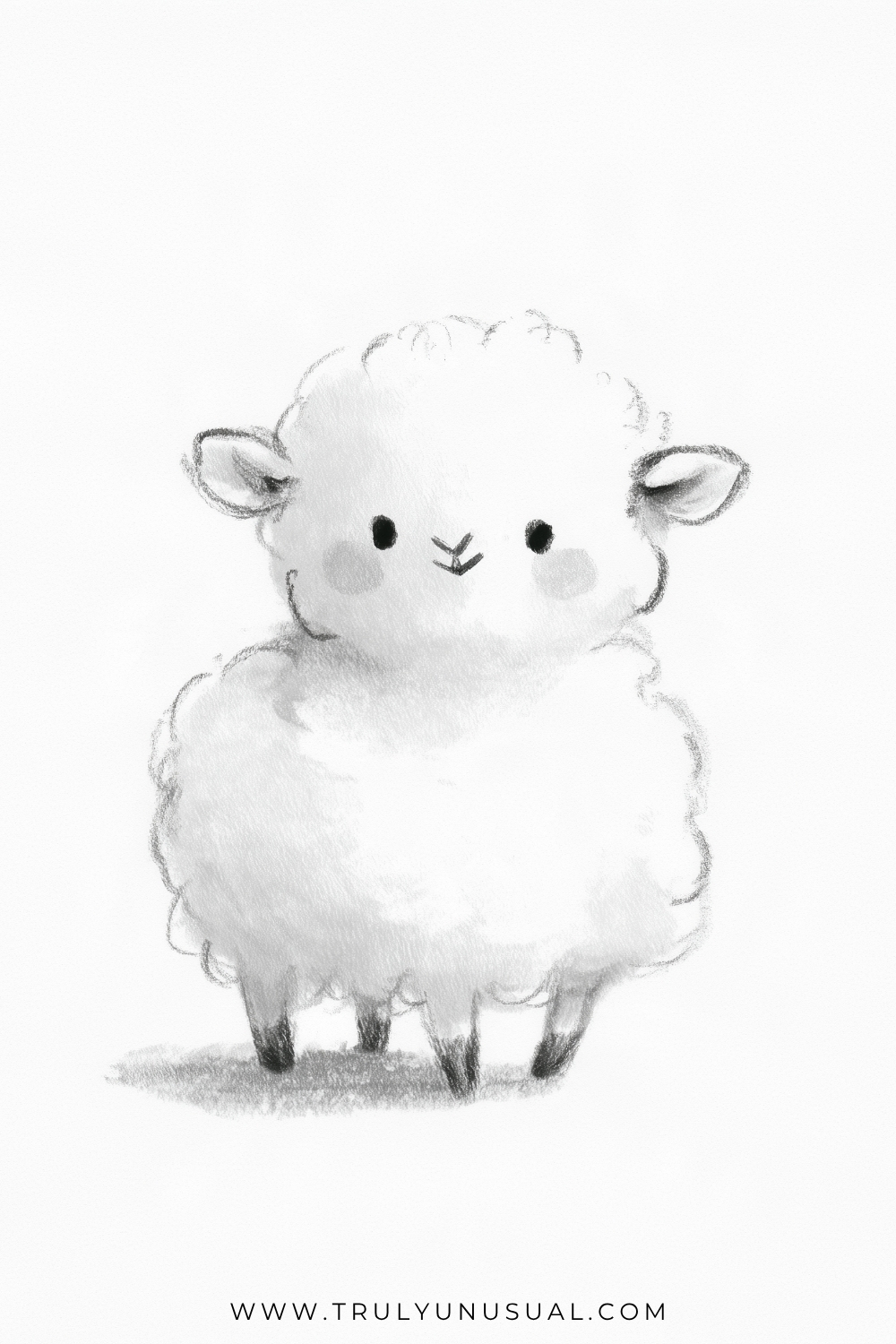
Think of a small cloud when sketching the wool around this lamb’s body.
A loose series of rounded bumps will look more natural than scallops that are all exactly the same size. Keep the face smoother, with little ears sticking out on either side and four short legs underneath.
Shade beneath the chin and around the lower fleece to give the white wool some depth without filling it in.
Round Little Hamster
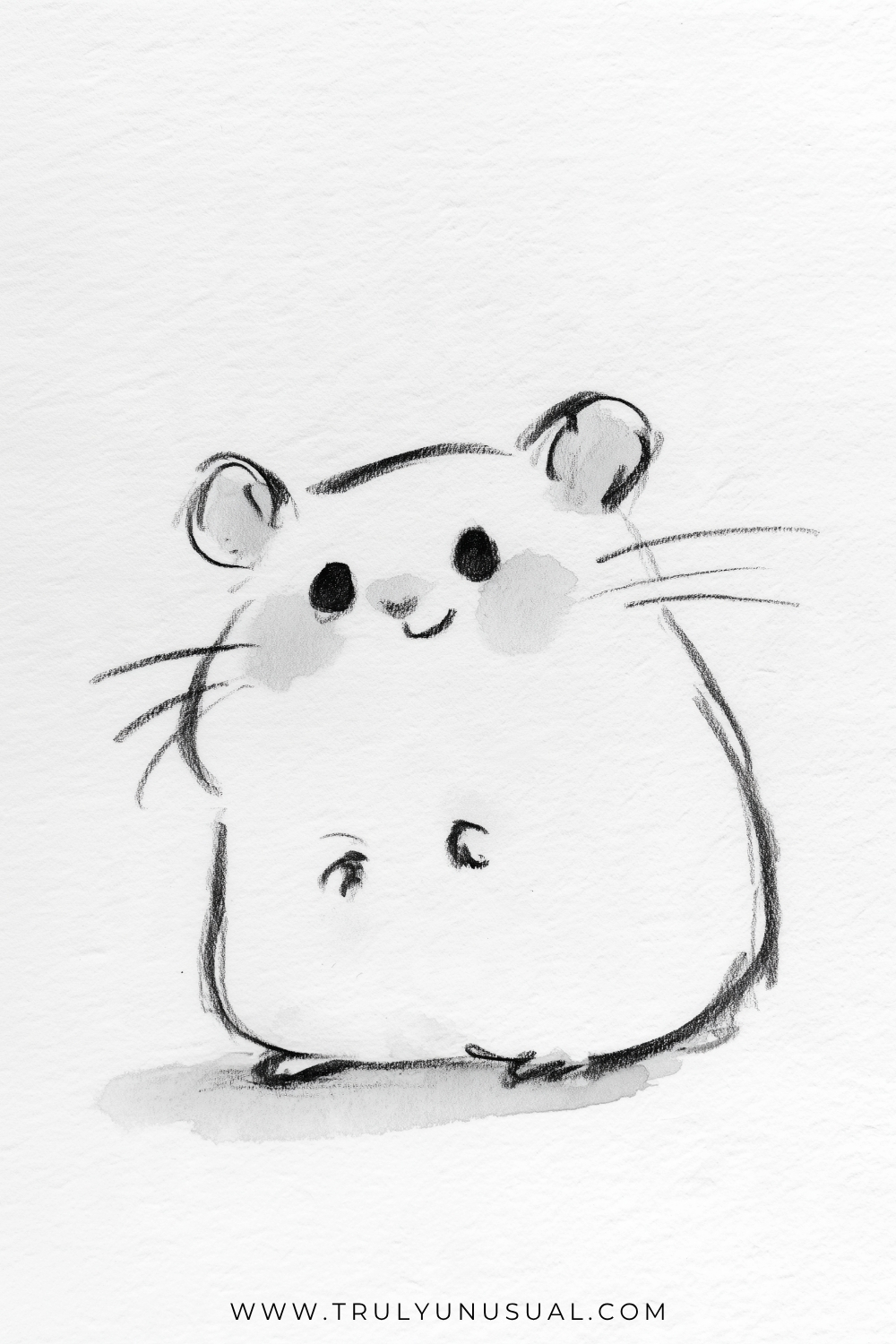
There’s hardly any separation between this hamster’s head and body, which keeps the drawing wonderfully simple.
Sketch a wide, rounded outline, then tuck two small ears into the top corners. The paws only need a couple of curved marks, while the long whiskers add some movement around the face.
Keep the cheek shading faint so it doesn’t compete with the tiny eyes and smile.
Fluffy Baby Penguin
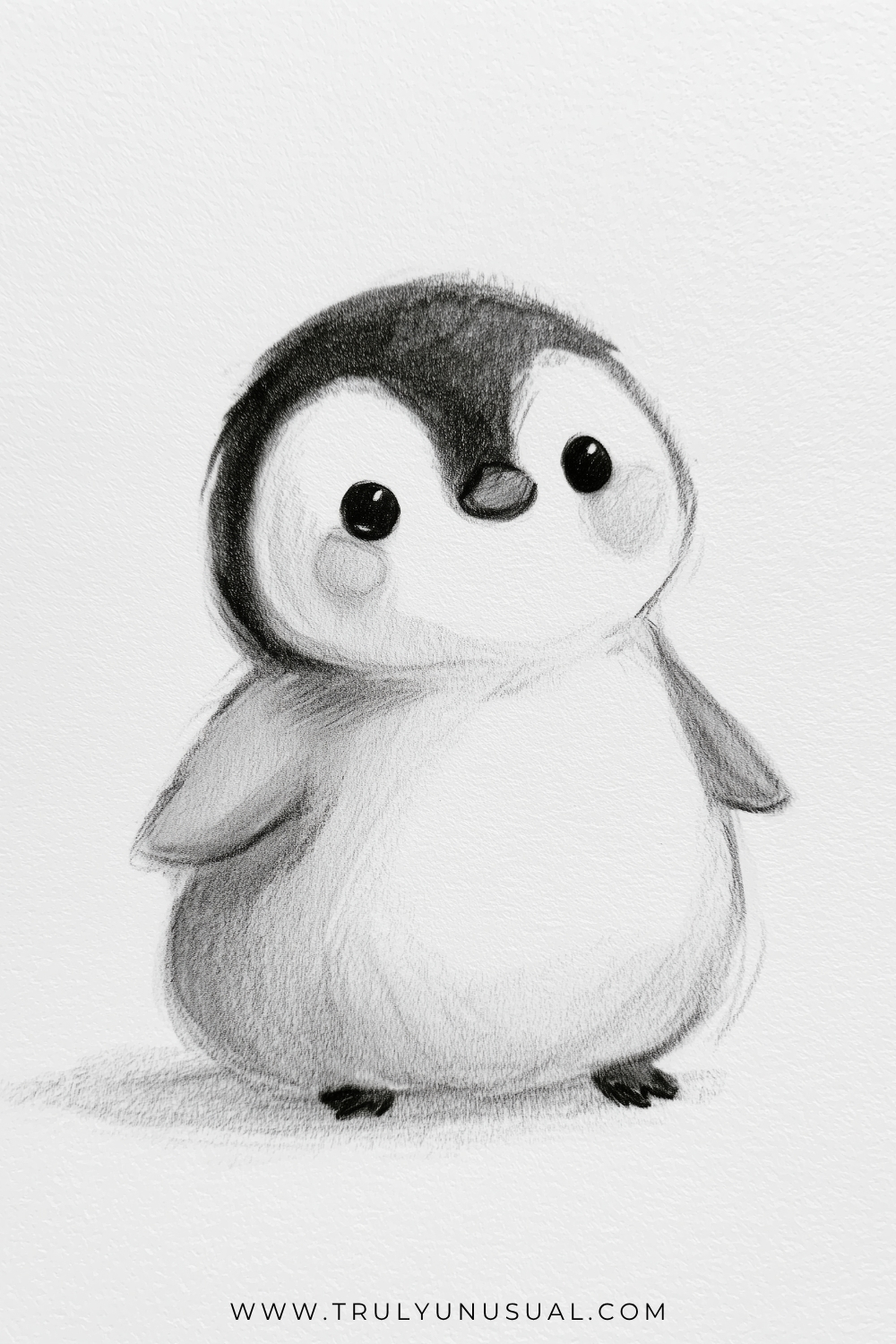
This little penguin gets its rounded look from a large head and a body shaped a bit like a pear.
Lightly mark the white patches around the eyes before shading the dark cap, so those areas stay clean. Use short, gentle pencil strokes along the sides and flippers, leaving the middle of the belly almost white.
Tiny highlights in the eyes and a soft shadow beneath the feet help bring it to life.
Once you’ve drawn a few of these animals, try changing something small to make them your own. Give your puppy floppier ears, draw your bunny looking over its shoulder, or experiment with different poses. Even moving the eyes a little can completely change an animal’s expression.
The best part is seeing how much character you can create with just a few pencil lines. You don’t need to copy every detail or get everything right on the first attempt. Leave your lighter sketch marks in place, try another version beside the first, and enjoy finding out which animals you like drawing most.
You can also try drawing the same animal in different styles. Keep one version as a simple outline, then shade another with short horizontal lines or vertical lines to see how the texture changes. If you enjoy comic books, experiment with bolder outlines and exaggerated expressions, or draw a few panels showing your little character getting up to something.
For a seasonal twist, take a look at my cute Halloween drawing ideas or easy Christmas drawings. You’ll find more pencil sketches to try, from little bats and pumpkins to reindeer and other festive characters.
Other drawing ideas and guides: How to draw a pickup truck | How to draw sushi.
Magdalena
If you enjoyed this post featuring cute animal drawing ideas, pin it on Pinterest to come back to it whenever you want and help it reach more readers!